Hey there! I’m part of an industrial robot supplier team, and today I wanna chat about the factors to consider when designing an industrial robot arm. It’s a super important topic, especially if you’re in the manufacturing game and looking to up your automation game. Industrial Robot
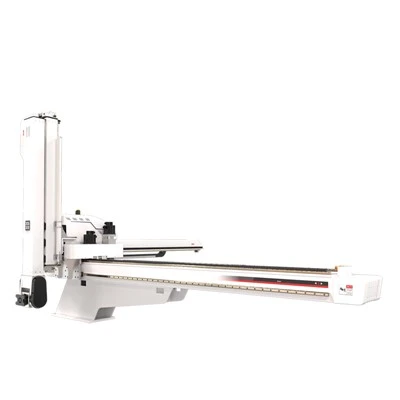
1. Payload Capacity
First off, let’s talk about payload capacity. This is basically how much weight the robot arm can handle. You gotta figure out what kind of stuff the robot’s gonna be moving around. Is it gonna be picking up small, lightweight parts, like tiny electronic components? Or is it gonna be dealing with heavy machinery parts?
If you underestimate the payload capacity, the robot arm might not work properly. It could break down, or it might not be able to move the objects at the speed you need. On the other hand, if you overestimate it, you’re gonna end up spending more money on a more powerful robot than you actually need. So, it’s all about finding that sweet spot.
We’ve seen a lot of customers come to us with different needs. Some are in the food industry, where they need to handle delicate items like pastries. For them, a robot arm with a lower payload capacity but high precision is the way to go. Others are in the automotive industry, where they’re moving heavy engine blocks. They need a beefy robot arm with a high payload capacity.
2. Reach and Workspace
Next up is the reach and workspace of the robot arm. The reach is how far the robot can extend its arm, and the workspace is the area in which the robot can operate. You need to think about where the robot is gonna be placed in your factory and what kind of tasks it’s gonna perform.
If you have a small workspace, you don’t want a robot arm with a huge reach that’s gonna take up too much room. But if you have a large factory floor and need the robot to cover a wide area, then a longer reach is essential.
For example, in a warehouse where they’re stacking and retrieving pallets, a robot with a long reach and a wide range of motion is necessary. But in a compact electronics assembly line, a smaller robot with a more limited reach can do the job just fine.
3. Precision and Repeatability
Precision and repeatability are crucial factors in robot arm design. Precision refers to how accurately the robot can position its end – effector (the part that interacts with the objects). Repeatability is about how consistently the robot can return to the same position over and over again.
In industries like aerospace and medical device manufacturing, precision is absolutely key. A small error in positioning can lead to a defective product, which can be really costly. So, you need a robot arm that can place components with extreme accuracy.
Repeatability is also important, especially in high – volume production. You want the robot to perform the same task the same way every time. If the robot can’t repeat its actions consistently, you’re gonna have quality control issues.
We’ve developed some really advanced robot arms that offer high precision and repeatability. Our customers in the semiconductor industry, for example, rely on these features to ensure the quality of their microchips.
4. Speed and Cycle Time
Speed and cycle time are also big considerations. The speed of the robot arm determines how fast it can move between different positions, and the cycle time is the total time it takes to complete one full task.
In industries with high – volume production, like consumer electronics manufacturing, speed is of the essence. You want the robot to work as fast as possible to increase productivity. But you also need to balance speed with precision. If the robot moves too fast, it might sacrifice accuracy.
Cycle time is related to speed. You want to minimize the cycle time to get more products out in less time. This means optimizing the robot’s path planning and programming.
We’ve helped many of our customers reduce their cycle times by fine – tuning the speed and motion control of our robot arms. This has led to significant increases in their production output.
5. Flexibility and Adaptability
In today’s fast – changing manufacturing environment, flexibility and adaptability are really important. You want a robot arm that can be easily reprogrammed to perform different tasks.
For example, if your manufacturing process changes, or if you start producing a new product, the robot should be able to adjust quickly. This means having a user – friendly programming interface and the ability to change the end – effector easily.
We offer robot arms that are highly flexible. They can be programmed using simple graphical interfaces, and we have a wide range of end – effectors available, so you can easily switch between different tasks.
6. Safety
Safety is non – negotiable when it comes to industrial robot arms. You need to make sure that the robot doesn’t pose a risk to the workers in the factory.
There are different safety features that you can incorporate into the robot design. For example, sensors can be used to detect the presence of humans or other objects in the robot’s workspace. If an object is detected, the robot can stop or slow down to avoid a collision.
We take safety very seriously. Our robot arms are equipped with state – of – the – art safety sensors and features. We also provide training to our customers on how to operate the robots safely.
7. Cost
Last but not least, cost is a major factor. You need to consider not only the initial purchase price of the robot arm but also the cost of maintenance, programming, and training.
A more expensive robot arm might have better features, but it might not be necessary for your specific needs. On the other hand, a very cheap robot arm might end up costing you more in the long run if it breaks down frequently or doesn’t perform well.
We offer a range of robot arms at different price points, so you can choose the one that best fits your budget and requirements. We also provide after – sales support to help you keep your costs down.
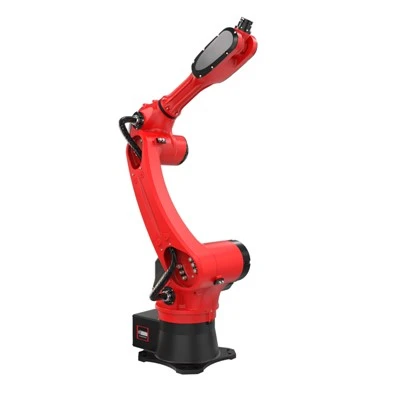
Welding Robot So, there you have it! These are the main factors to consider when designing an industrial robot arm. If you’re in the market for an industrial robot arm and want to learn more about how our products can meet your needs, don’t hesitate to reach out. We’re here to help you find the perfect solution for your manufacturing process.
References
- "Industrial Robotics: Technology, Programming, and Applications" by Peter Corke.
- "Robotics: Modelling, Planning and Control" by Bruno Siciliano, Lorenzo Sciavicco, Luigi Villani, and Giuseppe Oriolo.
Robotic Technology (GD) Co., Ltd.
Robotic Technology (GD) Co., Ltd. is one of the most experienced industrial robot manufacturers and suppliers in China, also supports custom service and one year warranty. Please feel free to wholesale CE approved industrial robot for sale here from our factory. Contact us for quotation.
Address: Room 102, No. 30,Hengfeng 2nd Road,Daguo, Changping Town, Dongguan City,Guangdong,China
E-mail: admin@iroboticplus.com
WebSite: https://www.rb-tic.com/
