Hey there! I’m a supplier of Autonomous Mobile Robots (AMRs), and I’ve seen firsthand the incredible impact these robots can have on various industries. One of the key aspects that makes AMRs so efficient and reliable is the communication protocols they use. In this blog, I’ll break down the different communication protocols in AMRs, why they’re important, and how they can benefit your business. Autonomous Mobile Robot

What are communication protocols in AMRs?
Communication protocols are like a common language that allows different devices, in this case, AMRs, to talk to each other and to other systems in a manufacturing plant, warehouse, or any other environment where they operate. These protocols ensure that the data is transmitted accurately, securely, and in a timely manner. Without proper communication protocols, AMRs would be like lost travelers in a foreign land, unable to understand or be understood.
Types of communication protocols used by AMRs
Wi – Fi
Wi – Fi is probably one of the most well – known communication protocols, and it’s widely used in AMRs. It offers a high – speed wireless connection, which is great for transmitting large amounts of data quickly. For example, when an AMR needs to send real – time video of its surroundings to a central control system or receive updated maps for navigation, Wi – Fi can handle the task efficiently.
However, Wi – Fi also has its limitations. The signal can be affected by physical obstacles like walls and metal shelves in a warehouse. Interference from other Wi – Fi devices can also cause problems, leading to dropped connections or slower data transfer speeds.
Bluetooth
Bluetooth is another popular protocol for AMRs, especially for short – range communication. It’s energy – efficient, which is a big plus for battery – powered robots. For instance, an AMR can use Bluetooth to communicate with a nearby sensor or a small device in the immediate vicinity.
Bluetooth Low Energy (BLE) is a variation that is even more power – efficient, making it suitable for long – term use in AMRs. But it has a limited range compared to Wi – Fi, usually up to about 100 meters in ideal conditions.
ZigBee
ZigBee is a protocol designed for low – power, low – data – rate wireless communication. It’s often used in sensor networks and can be a great option for AMRs that need to interact with a large number of sensors. ZigBee can form a mesh network, where each device can act as a relay, extending the network’s range and reliability.
This protocol is very reliable in terms of data delivery, as it has built – in mechanisms to handle interference and retransmit data if necessary. But its data transfer speed is relatively slow compared to Wi – Fi or even Bluetooth.
Ethernet
Ethernet is a wired communication protocol, and it offers high – speed, reliable data transfer. In an industrial setting, where stability is crucial, Ethernet can be a great choice for AMRs. For example, if an AMR is in a fixed position for charging or maintenance and needs to transfer large amounts of data to a server, Ethernet provides a stable connection.
The downside of Ethernet is that it requires physical cables, which can limit the mobility of the AMR. Also, setting up the infrastructure can be more complex and expensive compared to wireless protocols.
CAN (Controller Area Network)
CAN is a protocol commonly used in the automotive and industrial sectors. It’s designed for reliable communication between different electronic components in a system. In AMRs, CAN can be used to connect the robot’s various internal components, such as the motor controllers, sensors, and the main control unit.
CAN is known for its high – speed data transfer and its ability to handle multiple devices on the same network. It also has a high level of fault tolerance, which is important in a harsh industrial environment where electrical interference can be a problem.
Why are these protocols important?
Navigation and Mapping
Accurate communication protocols are essential for AMRs to navigate their environment. For example, an AMR needs to send and receive data about its position, the location of obstacles, and the layout of the area. Wi – Fi or Ethernet can be used to download updated maps from a central server, while Bluetooth or ZigBee can be used to communicate with local beacons or sensors for more precise positioning.
Task Management
AMRs are often assigned multiple tasks, such as picking up and delivering goods in a warehouse. Communication protocols allow the central control system to send task instructions to the AMR and receive status updates. For instance, the AMR can use Wi – Fi to inform the system when it has completed a task or if it has encountered an issue.
Safety
Safety is a top priority when it comes to AMRs. Communication protocols enable the robot to communicate with other safety devices in the environment, such as emergency stop buttons or safety sensors on other equipment. For example, if an AMR detects an obstacle using its sensors, it can use ZigBee to quickly send a signal to other nearby AMRs to avoid a collision.
How can these protocols benefit your business?
Increased Efficiency
With reliable communication protocols, AMRs can operate more efficiently. They can quickly receive and execute tasks, reducing the time it takes to complete operations. For example, in a warehouse, AMRs can use Wi – Fi to communicate with the inventory management system, ensuring that the right products are picked up and delivered at the right time.
Improved Flexibility
Different communication protocols offer different levels of flexibility. Wireless protocols like Wi – Fi, Bluetooth, and ZigBee allow AMRs to move freely in the environment without being restricted by cables. This means that you can easily reconfigure your workspace and add or remove AMRs as needed.
Cost – Effectiveness
Using the right communication protocols can also save you money in the long run. For example, ZigBee and Bluetooth are relatively low – cost options, especially for small – scale operations. And since they are energy – efficient, they can reduce the overall power consumption of your AMRs.
Wrapping Up
As you can see, communication protocols play a crucial role in the operation of Autonomous Mobile Robots. Whether it’s for navigation, task management, or safety, choosing the right protocol can make a big difference in the performance and effectiveness of your AMRs.
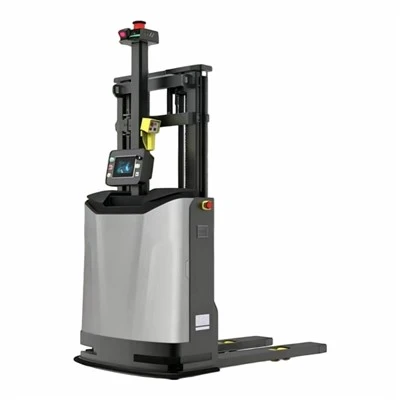
If you’re considering integrating AMRs into your business, it’s important to understand the different communication protocols and how they can meet your specific needs. We’re here to help you make the best decision. Our team of experts can provide you with in – depth information and guidance on which protocols are most suitable for your application.
Automated Guided Vehicle If you’re interested in learning more about our Autonomous Mobile Robots and how they can transform your operations, don’t hesitate to reach out. We’d love to have a chat with you about your requirements and how we can tailor our solutions to fit your business. Let’s work together to take your business to the next level!
References
- "Industrial Wireless Communication Technology Handbook" by Mohsen Guizani
- "Wireless Communication Protocols for Industrial Automation" by IEEE Xplore
- "Autonomous Mobile Robots: Navigation, Perception, and Control" by Springer
Shenzhen Ginnee Intelligent Warehousing Robotics Co., Ltd.
As one of the most professional autonomous mobile robot suppliers in China, we’re featured by quality products and low price. Please rest assured to wholesale durable autonomous mobile robot in stock here and get quotation from our factory. We also accept customized orders.
Address: Room101, No.162 JunXin Road, Niuhu Community, Guanlan Strect, Longhua District, Shenzhen, Guangdong Province, China.
E-mail: huangyongmei@szginnee.com
WebSite: https://www.ginneerobotics.com/
