As a provider of rotary motion control valves, I’ve witnessed firsthand the transformative power of positioners in enhancing the performance of these valves. In this blog, I’ll delve into the intricacies of how positioners improve the performance of rotary motion control valves, highlighting the key factors and benefits that make them an indispensable component in modern industrial applications. Rotary Motion Control Valve
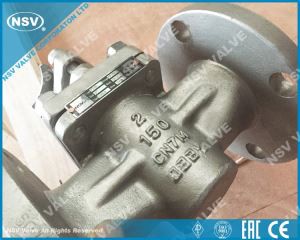
Understanding Rotary Motion Control Valves and Positioners
Before we explore the impact of positioners, let’s briefly understand the basic functions of rotary motion control valves. These valves are designed to regulate the flow of fluids (liquids, gases, or steam) by rotating a disc, ball, or vane to control the opening and closing of the valve. They are widely used in various industries, including oil and gas, chemical, power generation, and water treatment, due to their compact design, high flow capacity, and reliable performance.
A positioner, on the other hand, is a device that works in conjunction with the control valve to ensure accurate and precise valve positioning. It receives a control signal from a control system (such as a PLC or DCS) and uses this signal to adjust the valve’s position, counteracting any external forces or disturbances that may affect the valve’s operation. By providing continuous feedback and adjustment, the positioner helps to maintain the desired flow rate, pressure, or level within the system.
How Positioners Improve Valve Performance
1. Enhanced Positioning Accuracy
One of the primary benefits of using a positioner is its ability to improve the positioning accuracy of the rotary motion control valve. In many industrial applications, precise control of fluid flow is critical for maintaining process efficiency, product quality, and safety. However, without a positioner, the valve may not be able to achieve the desired position accurately due to factors such as friction, wear, and external forces.
A positioner uses a feedback mechanism, such as a potentiometer or a linear variable differential transformer (LVDT), to continuously monitor the valve’s position and compare it to the control signal. If there is a deviation between the actual and desired positions, the positioner will adjust the actuator’s output to correct the error, ensuring that the valve reaches and maintains the desired position with high precision. This accurate positioning helps to minimize process variability, reduce waste, and improve the overall quality of the end product.
2. Faster Response Time
In addition to improving positioning accuracy, positioners also help to reduce the valve’s response time. In dynamic industrial processes, fast response times are essential for maintaining stability and controlling process variables effectively. Without a positioner, the valve may take longer to respond to changes in the control signal, leading to delays in the process and potential instability.
A positioner can significantly reduce the valve’s response time by providing a more direct and efficient control mechanism. It amplifies the control signal and uses it to drive the actuator, allowing the valve to move more quickly and precisely in response to changes in the process conditions. This faster response time enables the system to adapt to sudden changes in flow rate, pressure, or temperature, improving process control and minimizing the risk of upsets.
3. Increased Valve Rangeability
Rangeability is an important performance parameter for control valves, which refers to the ratio of the maximum to the minimum flow rate that the valve can control effectively. A higher rangeability allows the valve to handle a wider range of flow conditions, providing greater flexibility in process control.
Positioners can help to increase the rangeability of rotary motion control valves by improving the valve’s linearity and accuracy over a wider range of positions. By compensating for the non – linear characteristics of the valve and actuator, the positioner ensures that the valve can provide a proportional response to the control signal throughout its entire operating range. This enhanced rangeability allows for more precise control of the flow rate, even in applications with large variations in process conditions.
4. Resistance to External Disturbances
In industrial environments, control valves are often subjected to external disturbances such as vibrations, temperature changes, and pressure fluctuations. These disturbances can affect the valve’s performance and cause it to deviate from the desired position, leading to process inefficiencies and potential safety hazards.
Positioners are designed to be highly resistant to external disturbances. They have built – in filters and damping mechanisms that can isolate the valve control system from vibrations and electrical noise. Additionally, the feedback control loop in the positioner continuously monitors the valve’s position and adjusts the actuator’s output to counteract any external forces that may cause the valve to move out of position. This resistance to external disturbances ensures the reliable operation of the valve under harsh industrial conditions.
5. Diagnostic and Monitoring Capabilities
Modern positioners are equipped with advanced diagnostic and monitoring capabilities that can provide valuable insights into the performance and health of the control valve. These features allow operators to detect and troubleshoot problems early, reducing downtime and maintenance costs.
For example, a positioner can monitor parameters such as valve travel, actuator force, and control signal input/output. It can detect abnormal behavior, such as excessive friction, leaks, or actuator failures, and alert the operator through alarms or diagnostic messages. Some positioners also have the ability to record historical data, which can be used for performance analysis and predictive maintenance.
Real – World Applications
The benefits of using a positioner in rotary motion control valves are evident in a wide range of real – world applications. In the oil and gas industry, for instance, positioners are used in pipeline control systems to regulate the flow of crude oil and natural gas. The accurate positioning and fast response time of the valves ensure the safe and efficient transportation of these valuable resources.
In the chemical industry, positioners are crucial for controlling the flow of various chemicals in manufacturing processes. Precise control of the flow rate is essential for maintaining the correct chemical reactions and ensuring product quality. The increased rangeability and resistance to external disturbances provided by positioners make them ideal for these demanding applications.
In power generation plants, positioners are used to control the flow of steam and water in boilers and turbines. The ability to maintain accurate valve positions under high – pressure and high – temperature conditions is critical for the efficient and reliable operation of the power generation equipment.
Conclusion
In conclusion, positioners play a vital role in improving the performance of rotary motion control valves. They enhance positioning accuracy, reduce response time, increase valve rangeability, resist external disturbances, and provide valuable diagnostic and monitoring capabilities. These benefits make positioners an essential component in modern industrial control systems, enabling more precise process control, improved efficiency, and increased reliability.

If you are looking for high – quality rotary motion control valves and positioners for your industrial applications, we are here to assist you. Our team of experts has extensive experience in the field of valve technology and can provide you with customized solutions to meet your specific needs. Whether you are dealing with a small – scale project or a large – scale industrial operation, we have the expertise and resources to deliver the best products and services.
Titanium Alloy Valves Contact us today to start a discussion about your requirements. Let’s work together to optimize your process control and achieve your business goals.
References
- Lieberman, N. P., & Lieberman, S. R. (2012). Troubleshooting Process Operations. Gulf Professional Publishing.
- Geitner, W. C. (2002). Process Control Instrumentation Technology. Prentice Hall.
- Danfoss. (2020). Control Valve Handbook. Danfoss.
- Emerson. (2021). Fisher Control Valve Technical Handbook. Emerson Electric Co.
NSV Valve Corporation
NSV Valve Corporation is one of the most professional rotary motion control valve manufacturers and suppliers in China, featured by quality products and good service. Please rest assured to buy rotary motion control valve made in China here from our factory.
Address: Puyi Road,Sanqiao Industrial Zone, Oubei Street, Yongjia County,Zhejiang,China
E-mail: info@nsvvalve.com
WebSite: https://www.nsvvalves.com/
