Hey there! I’m a supplier in the bolts business, and I often get asked about the differences between hex bolts and socket head bolts. So, I thought I’d break it down for you in this blog post. Bolts
Appearance and Design
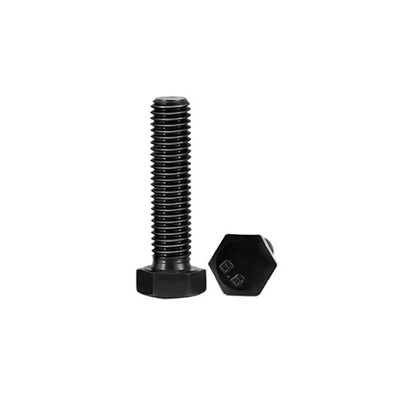
Let’s start with how these two types of bolts look. Hex bolts, as the name suggests, have a hexagonal head. This hexagonal shape is pretty common and easy to recognize. It has six flat sides, which are designed to be grabbed by a wrench. When you’re working on a project with a hex bolt, all you need is a standard wrench that fits the size of the hex head. You can tighten or loosen it by applying the right amount of torque using the wrench.
On the other hand, socket head bolts have a cylindrical head with a socket or recess in the center. This socket can come in different shapes, like a hexagon (hex socket), but there are also other types like Torx sockets. To work with a socket head bolt, you need a corresponding socket wrench or bit that fits into the recess.
The design of hex bolts makes them more visible and accessible on the surface. You can easily see the head of the hex bolt sticking out, and it’s easy to get a wrench onto it. Socket head bolts, however, are a bit more discreet. The socket design allows the head to sit flush or below the surface, giving a cleaner look. This feature makes socket head bolts a popular choice in applications where appearance matters.
Application and Use
The application of these bolts varies based on their design and properties. Hex bolts are super versatile and are used in a wide range of applications. They’re commonly found in construction projects, like building houses or bridges. In construction, they’re used to connect structural components together. For example, they can be used to attach steel beams or wooden frames.
Hex bolts are also used in machinery. You’ll find them in cars, trucks, and heavy equipment. In automotive applications, they’re used to hold engine parts, suspension components, and other mechanical parts in place. Their large, visible heads make them easy to work on, even in tight spaces where you might have to use a wrench.
Socket head bolts, on the other hand, are often used in applications where space is limited. Since the socket head can be recessed, it takes up less space compared to a hex bolt. This makes them ideal for use in machinery where there’s not a lot of room around the bolt. For example, in precision machinery like watches or small electronic devices, socket head bolts are used to hold components together without taking up too much space.
They’re also popular in the aerospace industry. In airplanes, every bit of weight and space matters. Socket head bolts are used because they can provide a strong connection while keeping the overall weight and size of the structure down.
Strength and Torque
When it comes to strength, both hex bolts and socket head bolts can be made to be very strong. The strength of a bolt depends on the material it’s made from and its grade. Most hex bolts and socket head bolts are made from steel, but they can also be made from other materials like stainless steel or titanium.
Hex bolts are usually designed to handle high levels of torque. Since you use a wrench on the large hexagonal head, you can apply a significant amount of force to tighten the bolt. This makes them suitable for applications where you need a strong, secure connection. In construction and heavy machinery, hex bolts are often used to withstand the high stresses and loads.
Socket head bolts, on the other hand, can also handle high torque, but they require a different approach. The socket design allows for a more concentrated application of torque. When you use a socket wrench or bit, you can apply a precise amount of torque without worrying about the wrench slipping off the bolt head. This makes socket head bolts a good choice in applications where you need to control the amount of torque, like in precision machinery.
Installation and Removal
Installing and removing hex bolts is relatively straightforward. As I mentioned earlier, all you need is a wrench that fits the size of the hex head. You place the wrench on the head of the bolt and turn it clockwise to tighten or counterclockwise to loosen. In some cases, you might need a second wrench to hold the nut on the other side of the bolt to prevent it from turning.
Installing socket head bolts requires a socket wrench or bit that fits the socket in the head. You insert the wrench or bit into the socket and turn it to tighten or loosen the bolt. One advantage of socket head bolts is that they can be installed in tight spaces where a regular wrench might not fit. However, you need to make sure you have the right size and type of socket wrench or bit for the job.
Removing a hex bolt can sometimes be a bit of a challenge if it’s been tightened really hard or if it’s rusted. You might need to use a breaker bar or apply some penetrating oil to loosen it. Removing a socket head bolt can also be difficult if the socket has been damaged or if there’s debris in the socket. In such cases, you might need to use a special tool to remove the bolt.
Cost
The cost of hex bolts and socket head bolts can vary depending on factors like the material, size, and grade. Generally, hex bolts are a bit more affordable. They’re more commonly used and mass-produced, which makes them cheaper to manufacture. Socket head bolts, on the other hand, are a bit more expensive. The socket design requires more precise machining, and the special tools needed to install them also add to the cost.
However, the cost difference might not be a major factor in some applications. If you need the specific features of a socket head bolt, like its low profile or precise torque control, then the extra cost might be worth it.
Conclusion
So, to sum it up, hex bolts and socket head bolts have their own unique features and applications. Hex bolts are more visible, easy to work with using a standard wrench, and are widely used in construction and machinery. Socket head bolts, on the other hand, are more discreet, suitable for applications with limited space, and allow for precise torque control.

If you’re in the market for bolts for your project, consider the specific requirements of your application. Do you need a strong, visible bolt that can handle high torque? Or do you need a low-profile bolt that can fit in tight spaces?
Anchors If you have any questions or are interested in purchasing bolts for your project, feel free to reach out. I’m here to help you find the right bolts for your needs.
References
- Machinery’s Handbook, 30th Edition
- ASTM International Standards for Bolts and Fasteners
Nantong Solite Rope Co., Ltd.
As one of the most professional bolts manufacturers and suppliers in China, we’re featured by quality products and good price. Please rest assured to wholesale bulk bolts in stock here and get free sample from our factory. Customized orders are welcome.
Address: Xitong Industrial Park, Zhangzhishan Town, Nantong City, Jiangsu Province.
E-mail: suolitewirerope@gmail.com
WebSite: https://www.solidropeglobals.com/
