In the vast landscape of electronic components, switching diodes stand as unsung heroes, playing a pivotal role in shaping the efficiency and performance of countless electronic devices. As a seasoned supplier of switching diodes, I’ve witnessed firsthand the incredible impact these tiny components have on the electronics industry. In this blog, I’ll take you on a journey through the inner workings of switching diodes, shedding light on their operation, applications, and why they are so crucial in modern electronics. Switching Diode
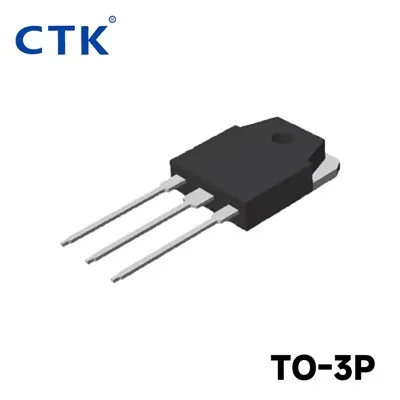
The Basics of Diodes
Before delving into the specifics of switching diodes, let’s first understand the fundamental concept of a diode. A diode is a two-terminal electronic component that allows electric current to flow in one direction while blocking it in the opposite direction. This unidirectional conductivity is the key characteristic that makes diodes so useful in electronic circuits.
The basic structure of a diode consists of a semiconductor material, typically silicon or germanium, with two distinct regions: the P-region (positive) and the N-region (negative). The boundary between these two regions is called the P-N junction. When a voltage is applied across the diode, the behavior of the P-N junction determines whether the diode conducts current or blocks it.
How a Switching Diode Differs
While all diodes share the basic principle of unidirectional conductivity, switching diodes are specially designed to excel in high-speed switching applications. Unlike regular diodes, which are optimized for rectification (converting alternating current to direct current), switching diodes can rapidly turn on and off, making them ideal for applications where fast switching speeds are required.
One of the key features of switching diodes is their low reverse recovery time. When a diode is switched from the conducting state to the non-conducting state, there is a brief period during which it continues to conduct current in the reverse direction. This is known as the reverse recovery time. In switching diodes, this time is minimized, allowing for faster and more efficient switching.
Another important characteristic of switching diodes is their low forward voltage drop. When a diode is in the conducting state, there is a small voltage drop across it. A lower forward voltage drop means less power is dissipated in the diode, resulting in higher efficiency and less heat generation.
The Working Principle of a Switching Diode
Now that we understand the basic differences between switching diodes and regular diodes, let’s take a closer look at how a switching diode actually works.
Forward Biasing
When a positive voltage is applied to the anode (the P-region) of a switching diode relative to the cathode (the N-region), the diode is said to be forward-biased. In this state, the external voltage overcomes the potential barrier at the P-N junction, allowing electrons from the N-region to flow into the P-region and holes from the P-region to flow into the N-region. This results in a large current flow through the diode, and it behaves like a closed switch.
Reverse Biasing
On the other hand, when a negative voltage is applied to the anode relative to the cathode, the diode is reverse-biased. In this state, the external voltage enhances the potential barrier at the P-N junction, preventing the flow of majority carriers (electrons in the N-region and holes in the P-region). However, a very small current, known as the reverse leakage current, still flows through the diode. This current is typically in the order of microamps or nanoamps and can be neglected in most applications.
Switching Action
The switching action of a switching diode occurs when the applied voltage changes from forward bias to reverse bias or vice versa. When the diode is switched from forward bias to reverse bias, the built-in capacitance of the P-N junction must be discharged before the diode can completely block the reverse current. This discharge process takes a finite amount of time, known as the reverse recovery time.
During the reverse recovery time, the diode conducts a large reverse current before finally turning off. To minimize the reverse recovery time, switching diodes are designed with a special doping profile and structure. This allows the excess carriers in the P-N junction to recombine quickly, reducing the time it takes for the diode to switch from the conducting state to the non-conducting state.
Applications of Switching Diodes
Switching diodes find a wide range of applications in modern electronics, thanks to their fast switching speeds and low power consumption. Some of the most common applications include:
Signal Switching
In communication systems, switching diodes are used to switch signals between different circuits or components. For example, in a radio frequency (RF) switch, switching diodes are used to route RF signals to different antennas or receivers. The fast switching speeds of switching diodes ensure that the signals can be switched quickly and efficiently, without causing any significant distortion.
Rectification in High-Frequency Circuits
While regular diodes are commonly used for rectification in low-frequency circuits, switching diodes are preferred in high-frequency applications. Their low reverse recovery time allows them to switch on and off rapidly, making them suitable for rectifying high-frequency alternating current signals.
Clamping and Limiting Circuits
Switching diodes are also used in clamping and limiting circuits to protect sensitive electronic components from overvoltage or undervoltage conditions. In a clamping circuit, a switching diode is used to limit the voltage at a particular point in a circuit to a specified level. In a limiting circuit, a switching diode is used to prevent the voltage from exceeding a certain maximum value.
Logic Gates
In digital circuits, switching diodes are used to implement logic gates such as AND, OR, and NOT gates. The fast switching speeds of switching diodes allow for high-speed operation of these logic gates, making them essential components in modern digital systems.
Why Choose Our Switching Diodes
As a leading supplier of switching diodes, we take pride in offering high-quality products that meet the stringent requirements of our customers. Here are some of the reasons why you should choose our switching diodes:
High Performance
Our switching diodes are engineered to provide excellent performance, with fast switching speeds, low reverse recovery times, and low forward voltage drops. This ensures that they can meet the demands of even the most challenging applications.
Reliability
We understand the importance of reliability in electronic components, especially in critical applications. That’s why we use only the highest quality materials and manufacturing processes to ensure the reliability and longevity of our switching diodes.
Customization
We offer a wide range of switching diodes with different specifications and packages to meet the specific needs of our customers. In addition, we also provide customization services, allowing us to develop switching diodes that are tailored to your unique requirements.
Technical Support
Our team of experienced engineers is available to provide technical support and assistance to our customers. Whether you have a question about the performance of our switching diodes or need help with a specific application, we’re here to help.
Conclusion
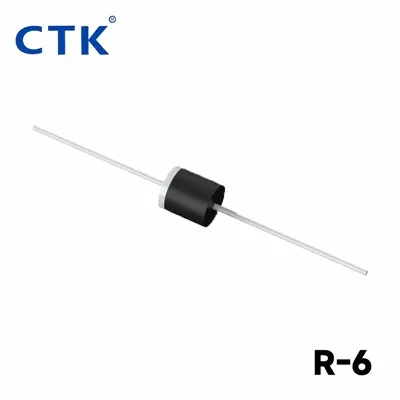
Switching diodes are essential components in modern electronics, playing a crucial role in high-speed switching applications. Their ability to rapidly turn on and off, combined with their low power consumption and high reliability, makes them indispensable in a wide range of industries, from telecommunications to consumer electronics.
Middle Voltage MOSFETs As a trusted supplier of switching diodes, we’re committed to providing our customers with the highest quality products and services. If you’re in the market for switching diodes, we invite you to contact us to discuss your requirements. Our team of experts will be happy to assist you in finding the right switching diodes for your application and provide you with a competitive quote.
References
- Boylestad, R. L., & Nashelsky, L. (2013). Electronic Devices and Circuit Theory. Pearson.
- Sedra, A. S., & Smith, K. C. (2015). Microelectronic Circuits. Oxford University Press.
- Millman, J., & Taub, H. (1986). Pulse, Digital, and Switching Waveforms. McGraw-Hill.
Tongke Electronic Co., Ltd
Tongke Electronic Co., Ltd. is one of the most experienced switching diode manufacturers and suppliers in China, featured by quality products and low price. Please rest assured to wholesale advanced switching diode made in China here from our factory. Contact us for pricelist.
Address: No.3,Chayuan Rd, Street 3, AilingKan, Dalingshan, Dongguan, Guangdong, China.
E-mail: jack@ctk-elec.com
WebSite: https://www.ctkchip.com/
