If you’re deep in electronic manufacturing, component sourcing, or prototyping, you’ve almost certainly come across the term “1.20mm pitch” in datasheets, part numbers, or supplier specs. When I first started out in this industry, I’ll admit I glossed over it at first—just another niche metric among a hundred others. But as a supplier specializing in 1.20mm pitch connectors, pin headers, and related interconnects, I’ve learned that getting pitch right isn’t just a technical detail; it’s the difference between a product that fits, functions, and doesn’t waste critical board space. Today, I want to break down what 1.20mm pitch actually means, why it matters, and what that translates to for anyone working with electronics. 1.20mm Pitch

Let’s start with the basics: pitch in electronics refers to the center-to-center distance between adjacent conductive elements—pins, pads, terminals, whatever. It’s the universal measurement for how tightly packed an interconnect is, and it’s expressed in millimeters, which is why you’ll never see a “1.20 inch” pitch part (that’s far too large for today’s miniaturized designs). So, 1.20mm pitch means the center of one pin or pad is exactly 1.2 millimeters away from the center of the next one. That might sound straightforward, but it’s a precision measurement—often specified to within a few microns—and that’s where the confusion starts for a lot of folks.
For context, let’s put 1.20mm pitch in perspective. Common connector pitches range from 0.4mm (super tiny, used for high-density smartphones and wearables) up to 2.54mm (the standard through-hole pin header you’ve probably held a hundred times). 1.20mm sits right in the middle of that spectrum: smaller than 2.54mm, so it saves space, but larger than 0.4mm, so it’s more forgiving during assembly. That balance is why it’s become a go-to for a huge range of applications, from industrial automation and medical devices to consumer electronics and automotive electronics.
Wait, let’s get specific about the numbers here. You might notice it’s not 1mm or 1.5mm—it’s exactly 1.20mm. That precision is intentional. A lot of suppliers will round pitches for marketing, but 1.20mm is a standardized, IPC-aligned measurement (IPC is the global body that sets electronic assembly standards). That means every part marketed as 1.20mm pitch will have that exact center-to-center spacing, no guesswork. The “.20” isn’t a typo—it’s two decimal places, which reflects the tolerance most of our parts adhere to: typically ±0.05mm, which is tight enough to prevent misalignment during soldering, but not so tight that it requires specialized, expensive equipment for prototyping.
Let’s talk about what that means in practice for assembly. If you’re a design engineer soldering connectors to a printed circuit board (PCB), the pitch directly dictates the size of the holes you drill and the spacing of the solder pads on the board. For a 1.20mm pitch through-hole header, for example, the holes on the PCB will be slightly less than 1.2mm apart to account for the pin’s diameter—usually around 0.6mm to 0.7mm pins are standard for 1.20mm pitch. If you mismeasure, and your pitch is off even by 0.1mm, the pins won’t line up, and you’ll have to rework or scrap the board. That’s where a reliable supplier matters: we don’t cut corners on that pitch measurement. Every one of our 1.20mm pitch parts is inspected at multiple stages of production to ensure the spacing doesn’t drift, even after molding and plating, which can sometimes cause tiny shifts if not controlled properly.
Another common point of confusion: pitch vs. pin count. A lot of people mix these up, especially when looking at part numbers. A 1.20mm pitch connector isn’t defined by how many pins it has—it’s defined by the spacing between those pins. You can get a 2-pin 1.20mm pitch power connector, a 100-pin 1.20mm pitch board-to-board connector, a 50-pin 1.20mm pitch ribbon cable connector—all of them have that same 1.2mm center-to-center distance between pins, which is the key identifier. That’s why it’s so cross-compatible: if you design a PCB to use 1.20mm pitch interconnects, you can swap parts from different suppliers as long as they match that pitch, without needing to rework the board. That flexibility is a huge plus for manufacturers who need to adjust their supply chain without redesigning every component.
Now, why choose 1.20mm pitch over other options? Let’s talk about the sweet spot it occupies. For years, 2.54mm pitch was king for through-hole connectors, but as devices got smaller, engineers needed tighter packing. 0.8mm and 0.4mm pitch are great for ultra-compact applications like smartwatches, but they require pick-and-place machines with sub-micron accuracy, and even small errors during soldering can cause short circuits. 1.20mm hits a middle ground: it’s small enough to reduce PCB footprint by roughly 40% compared to 2.54mm pitch, which is a big deal for space-constrained devices, but large enough that most standard assembly equipment can handle it. For example, a robotics sensor module that needs to fit on a compact circuit board might use a 1.20mm pitch connector to connect its sensor array to the main controller, whereas a smartphone’s camera module might use a tighter 0.4mm pitch.
We’ve seen this play out in real projects with our clients. Last year, a team designing a portable ultrasound device came to us after struggling with 0.8mm pitch connectors that kept failing in their prototyping phase—they were too tight, and the delicate pins would bend during assembly. They switched to our 1.20mm pitch board-to-board connectors, and not only did their assembly yield jump from 65% to 92%, but they also saved 15% of PCB space, which let them shrink the device’s overall size by 20%. That’s the value of choosing the right pitch, not just the smallest one available.
Another area where 1.20mm pitch shines is in rugged applications, like industrial control panels or automotive ECUs. Those environments have vibration, temperature swings, and dust that can wreak havoc on delicate interconnects. Tighter pitches (0.4mm, 0.6mm) have thinner pins and smaller solder joints, which are more prone to breaking under vibration. 1.20mm pitch uses thicker pins (typically 0.6mm diameter) and larger solder pads, making it more durable while still keeping the footprint compact. Many automotive suppliers specify 1.20mm pitch connectors for in-vehicle networking systems for exactly that reason: they need to survive 10,000+ vibration cycles and temperature ranges from -40°C to 125°C, and 1.20mm holds up better than smaller pitches in those conditions.
That said, there are limitations to 1.20mm pitch, and it’s not the right choice for every project. If you need very high-speed data transfer, for example—like a PCIe or USB 3.2 connection—you might need a smaller pitch (0.5mm or 0.8mm) to reduce signal crosstalk between adjacent pins. If you’re working on a large format display or a power distribution board, a larger pitch (1.5mm or 2.54mm) might be better for higher current carrying capacity. The key is matching the pitch to your specific application’s needs, not just following trends for miniaturization. That’s why as a 1.20mm pitch supplier, we don’t just sell parts—we work with engineers to help them figure out if 1.20mm is the right fit, or if they should go with a different pitch to avoid unnecessary costs or reliability issues.
Let’s also touch on quality, because that’s a big part of what we do. A lot of low-cost overseas suppliers will market “1.20mm pitch” parts but cut corners on manufacturing, leading to inconsistent spacing, bent pins, or poor plating that causes corrosion. We test every batch of our interconnects to ensure the pitch remains within ±0.05mm, and we perform 100% visual inspection for critical components. We also use gold-plated terminals for most of our 1.20mm pitch parts, which prevents oxidation and ensures a reliable connection even after years of use. That level of quality is non-negotiable for our clients, especially in medical or aerospace applications where a failed component can have serious consequences.
If you’re working on a project right now where you’re deciding on an interconnect pitch, here’s a quick checklist to keep in mind:
- Measure the available space on your PCB: Calculate how much room you can dedicate to connectors, and choose a pitch that fits without crowding other components.
- Consider assembly capabilities: Do you have access to pick-and-place machines that can handle ultra-tight pitches, or will you be doing hand assembly for prototypes? 1.20mm is ideal for both automated and hand assembly.
- Account for environmental conditions: Will the part be exposed to vibration, extreme temperatures, or moisture? 1.20mm’s thicker pins make it more rugged than smaller pitches.
- Check for compatibility: If you’re working with existing parts or PCBs, confirm the pitch matches, and make sure any replacement parts you source use the same standardized measurement.
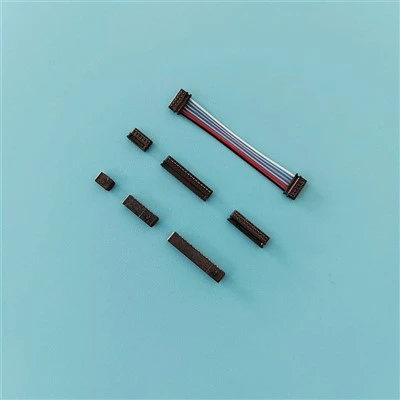
At the end of the day, 1.20mm pitch is more than just a number—it’s a standardized, versatile solution that balances space savings, assembly ease, and reliability. We’ve supplied 1.20mm pitch parts to industries ranging from medical devices to aerospace, and every time, we see how the right pitch choice can make a project more successful. Whether you’re a design engineer prototyping a new product, a procurement manager sourcing components, or a hobbyist working on a personal project, if 1.20mm pitch is what you need, we’re here to provide high-quality, consistent parts tailored to your requirements. Don’t hesitate to reach out to discuss your specific needs—we’re happy to answer questions, provide sample parts, or walk through how our 1.20mm pitch interconnects can fit into your project.
0.60mm Pitch References
IPC-A-600, Acceptability of Printed Boards
IPC-2221, Generic Standard on Printed Board Design
Electronic Components Industry Association (ECIA) Standard for Interconnect Pitch Measurements
Dongguan Yinglian Electronics Co., Ltd.
As one of the most professional 1.20mm pitch suppliers in China, we have world-leading production equipment and strong manufacturing capabilities. We warmly welcome you to buy bulk high quality 1.20mm pitch at competitive price from our factory.
Address: No.12, Jidele Road, Juqi, Humen Town, Dongguan City, Guangdong Province, P.R. China
E-mail: James@csg-china.com
WebSite: https://www.csg-conn.com/
