If you’ve ever stood in front of a water screen, you know how mesmerizing it is—those glowing streams of water dancing in time to music or lights, right? But here’s a question I get all the time from teachers, museum curators, and even hobbyists: Can this cool tech actually be used to teach stuff? As a Water Screen supplier who’s helped set up everything from elementary school science fairs to community college media labs, I’m here to tell you it’s not just a party trick. It’s a flexible, hands-on tool that can make boring topics click for all kinds of learners. Water Screen
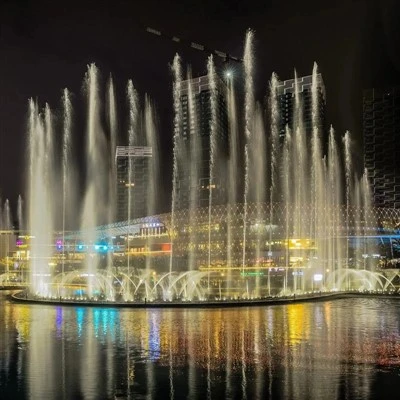
First, let’s break down what a water screen even is, in simple terms (no jargon, promise). It’s basically a thin, controlled sheet of water projected from tiny nozzles, usually paired with projectors. Unlike a regular screen, it’s interactive—you can touch the water, draw on it with your finger, or even change the flow in real time. For kids who zone out during lectures about fluid dynamics, that’s a game-changer. I remember a 5th-grade science teacher in Chicago hit me up last year because her students “couldn’t wrap their heads around surface tension” until she set up a mini water screen in her classroom. Instead of drawing molecules on a whiteboard, they watched as a steady water sheet held its shape, saw what happened when they blew a bubble into the flow, and even tested different water temperatures to see how tension changed. No worksheets could make that stick half as well.
It’s not just elementary school, either. High school physics classes use water screens to teach everything from wave patterns to light refraction. You can project a laser onto the water sheet and watch the light bend as it moves through the water—way more concrete than a textbook diagram. My team helped a Texas high school last month build a small outdoor water screen for their annual STEM night. They programmed it to display a sine wave whenever someone stepped on a sensor, and kids competed to guess the frequency of the wave. I swear, half those teens who used to hate math stayed 2 hours past their dismissal time just to mess with it. Even college students get a kick out of it; I worked with a university’s digital media department last semester to let their students create interactive art that teaches hydrology basics. The screen would show rain patterns based on how they moved their hands in front of it, so they learned about precipitation rates just by playing.
Wait, but what about other subjects? People assume water screens are only for STEM, but no—we’ve used them for history, too. A local museum here in Portland (where my shop is based) put up a water screen for their “Ancient Water Civilizations” exhibit. They projected images of Roman aqueducts and Egyptian irrigation systems onto the water, and when visitors traced the aqueduct paths with their hands, the screen lit up to show how water flowed through those systems. It turned a dry history topic into something you could actually interact with. Even English classes have gotten in on it; a middle school teacher in Seattle used a small water screen to project lines from The Rime of the Ancient Mariner while her students acted out the story. The water’s flow mirrored the tone of the poem—calm for the quiet parts, choppy during the storm scenes. Suddenly, kids were talking about “tone” not as a vague term, but as something they could see in the water.
Now, let’s be real—you can’t set up a big commercial water screen in a tiny classroom. That’s why we build different sizes, from desktop models (perfect for a lab table) to mid-sized ones that fit in a school auditorium or community center. A lot of people think they’re super expensive, but we’ve worked with schools to get grants and bulk pricing, so it’s doable. The key is to match the screen size to the learning goal: small for individual experiments, big for group activities. I also tell schools to think about where to put it—outdoor areas work great because the water feels less enclosed, but indoor ones can be set up with curtains to block extra light so the projections are clear.
Of course, there are a few things to keep in mind if you’re thinking about using a water screen for learning. For one, you need a way to control the projections—most screens work with regular projectors, but some of the smarter models let you sync the water flow to the content. We usually teach teachers how to use basic software to adjust the screen, so it’s not just for tech experts. Also, water screens need a little maintenance—nothing crazy, just checking the nozzles every so often to make sure they don’t get clogged. I send a quick how-to guide with every screen we sell, and our team is always available to answer questions if something goes wonky.
I’ve seen this firsthand, too. A few years back, a high school in Detroit used a water screen as part of their environmental science program. They tracked local river pollution by projecting data points onto the water screen—each dot represented a test sample, and the size of the dot showed how much plastic was found. Students could see the data in real time as they tested different parts of the river, and they ended up using their findings to push for a local plastic ban. That’s the kind of impact water screens can have—they’re not just teaching, they’re inspiring kids to care about the world around them.
Don’t get me wrong, water screens aren’t a replacement for textbooks or lectures. But they’re a supplement that turns passive learning into active doing. I’ve watched a student who used to struggle with physics get so excited when he figured out how to adjust the water flow to create a perfect standing wave. I’ve seen a history class argue over which ancient aqueduct design worked better, just because they could see both on the screen. That’s the magic of it—learning doesn’t have to be boring. It can be something you touch, play with, and remember long after the bell rings.
If you’re a teacher, administrator, or just someone who’s curious about how a water screen could work for your school or program, reach out. We work with all kinds of groups to figure out the best setup, from small desktop models for classrooms to larger screens for community events. It’s not just selling a product—it’s helping people find cool ways to teach. Let’s chat about what you’re looking for, and we can build something that fits your needs and your budget.
Musical Fountain References:
- NASA. (2021). Fluid Dynamics in Educational Settings. STEM Education Resources.
- International Society for Technology in Education. (2022). Interactive Technologies for K-12 Learning. Journal of Educational Technology.
- American Association of Museums. (2020). Using Interactive Media in Museum Exhibits. Museum Education Review.
- Physics Classroom. (2023). Wave Interactions Demonstrations. High School Physics Labs.
- UNESCO. (2019). Water-Based Technologies for Environmental Education. Education for Sustainable Development Guidelines.
Hebei Mingchuang Landscape Engineering Co., Ltd.
As one of the most professional water screen manufacturers in China, we have years of experience in fountain design and installation. Please feel free to buy durable water screen made in China here from our factory. Welcome to view our website for more information.
Address: Dongyangzhuang Village, Beidiantou Township, Tang County, Baoding City, Hebei Province
E-mail: 1094267503@qq.com
WebSite: https://www.mcfountains.com/
