Hey everyone, it’s Jake here from Multi-unit Abutments—yep, the multi-unit abutment (MUA) supplier you’ve probably geeked out with over fittings and fix-talks in the past. I get it, when a piece of gear as core as an MUA takes a hit, your first thought isn’t “replace it”—it’s “can I fix this and save the headache?” Because let’s be real, dropping thousands on a new one last minute? Not fun, especially when your clinic’s booked solid or your lab’s running behind on cases. Today we’re breaking down exactly if MUAs are repairable, what’s actually fixable, what’s a hard no, and why picking the right MUA makes all the difference when something goes wrong. Multi-unit Abutments

First off, let’s cut through the jargon—we’re not talking about patching a flat tire here. MUAs are those titanium (sometimes ceramic-tipped) connectors that link dental implants to final restorations, perfect for when you’re connecting multiple teeth with one implant. They’re built to be tough—they have to handle years of chewing force, repeated tightening, all the small bumps and knocks that come with daily clinical work. But that doesn’t mean they’re indestructible. Most of the questions I get weekly aren’t about if MUAs break—they’re about if fixing them is actually worth it, or if you’re just wasting your time.
Let’s start with the good news: a lot of common MUA issues are repairable—if you catch them early and know what you’re working with. Let’s run through the most frequent problems I see at our supplier, and what you can actually fix, versus what needs a swap.
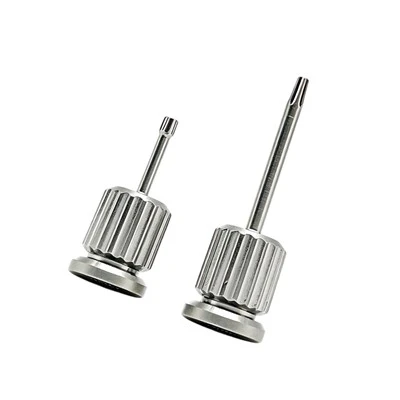
First up: the tiny screw that holds the MUA to the implant (that’s the abutment screw, for anyone new here). This little guy is basically the MUA’s tight-rope—too loose, and the whole unit wiggles; too tight, and it strips or snaps. And guess what? 9 times out of 10, a broken or stripped abutment screw is fixable. Wait, really? Yeah—most clinics don’t realize it, but the screw isn’t part of the permanent MUA structure. If it strips, you just have to make sure you’re using the right torque driver, not over-tightening (that’s a super common mistake—everyone’s in a rush to lock the unit down, and 35 Ncm becomes 45 Ncm before you know it), and picking a screw made by the same brand as your MUA. Cross-brand screws might fit, but they’re not machined exactly the same, so they strip way easier. We stock replacement abutment screws for all our MUA lines, and I can’t tell you how many clients I’ve sent a pack to that thought they needed a whole new MUA, just because they were over-torquing on a single screw.
Next: surface scratches and minor wear on the MUA’s connection points. The part that clicks into the implant, or the part that holds the final crown or bridge—those little scuffs from cleaning tools, or a tiny drop on the counter? Those are almost always repairable with a little polishing. Titanium is soft enough that a skilled tech can buff out superficial scratches without messing up the MUA’s fit (fit is everything, by the way—even a 0.1mm gap can cause infection or irritation). The only time scratches are a problem is if they’re deep enough to catch a floss threader, or if they’re on the internal connection that locks to the implant. If that internal connection is scratched, you might not be able to get a tight seal, but again—most minor scuffs here can be polished back to spec, no need for a new unit.
What about the MUA’s angulation? Wait, some MUAs have a built-in angle, right? If that angle gets knocked off, so it doesn’t line up with the implant anymore—can you fix that? Hmm, let’s clarify: if it’s a permanent angled MUA (not the adjustable kind), and the angle is shifted because of a hard impact, that’s a different case. But if it’s just misaligned because of improper placement, you might be able to adjust it with a torque driver, but if it’s physically bent from a drop? That’s a hard no for repair. Titanium can bend, but once it’s bent, it’s not going to hold its angle under chewing force—you’ll risk the crown breaking or the implant coming loose, so replacement is safer there.
Now, let’s talk about the stuff that’s not worth fixing, even if you think you can. This is the stuff I always warn my clients about, because I’ve seen people try to patch these issues and end up costing themselves way more in the long run. First: cracks in the MUA. Titanium is strong, but it can crack—usually from a sudden impact, or from repeated stress at the same spot. If you see even a tiny surface crack, that’s not fixable. Cracks mean the MUA’s structural integrity is compromised; chewing force will make that crack spread, and you could end up with the whole unit breaking inside the implant, which is way harder to extract than a whole MUA. Second: stripped internal threads. The part that screws into the implant—if those threads are stripped, you can’t get a tight fit, no matter how much you polish or tighten. We see this all the time when clinics use too small a driver to turn the MUA into the implant; it strips the threads before anyone notices. Once threads are stripped, you’re better off replacing the whole MUA than risking a loose unit that causes pain for the patient. Third: ceramic tip damage. A lot of our MUAs have a ceramic outer layer to match crowns, and if that ceramic chips or cracks? Most of the time, ceramic can’t be repaired safely. Trying to fill a chip with dental cement or composite will just end up with the cement breaking off, or the chip getting larger under chewing force. Again, replacement is the way to go here.
Wait, but hold on—why do I, as a supplier, care this much about repair? I get that question a lot. Do I lose money when people fix their MUAs instead of buying new ones? Maybe sometimes, but here’s the thing: our whole brand is built on supporting dentists and labs, not just selling you a product and disappearing. If a client fixes an MUA and has a great experience, they’ll come back when they do need a new unit, and they’ll tell their colleagues about us. Plus, I’ve had too many clients come to me after a botched repair that cost them a crown, an implant, and a month of missed appointments, just because they tried to save $50 on polishing instead of getting a new MUA. So trust me, I’m not pushing repair just to be nice—I’m pushing it because it works, when done right, and I want you to save your time, money, and stress.
Let’s also talk about a common misconception I hear all the time: “All MUAs are the same, so a repair from any lab is fine.” No. Just no. MUAs are machined to super tight tolerances—like, within micrometers. A dental lab might polish a scratch on one of our MUAs, but if they use the wrong polishing tool, or don’t check the fit with a calibration gauge, they could accidentally alter the connection point, leading to a poor fit. That’s why I always recommend working with a lab that specializes in implant parts, not just general dental work. At our supplier, we even offer a complimentary fit check for any MUA that a client brings in—we’ll scan it, check the connection to our implant lines, and tell you if it’s safe to repair, or if you need a replacement. Small stuff like that makes all the difference between a successful repair and a nightmare.
Another thing that’s super important: patient factors. Wait, you can’t forget about the patient when deciding to repair or replace. If the MUA is for a patient who’s a heavy grinder or clencher (bruxism)—yeah, even if the MUA only has a minor scratch, fixing it might not be worth it. Bruxism puts 2-3 times more force on dental parts, so a repaired MUA might not hold up. Same if the patient has a history of implant issues, like peri-implantitis—you want the most solid possible foundation, so replacement is better there. But for a patient who takes good care of their teeth, doesn’t grind, and the MUA only has a tiny scratch or a stripped screw? Repair is totally fine, and saves everyone time.
Let’s run through a quick real example from last month, to make this concrete. A clinic in Portland hit me up panicking—their lead MUA for a 3-unit bridge case had dropped off the counter, and the internal connection had a tiny scratch, plus the abutment screw was bent. When they sent it over, we scanned it, checked the connection, and saw the scratch was superficial (so polishing would fix it) and the screw was only bent at the very end (so a replacement screw would work). We polished the MUA, sent the new screw, and they used it for the case a week later—no issues, the patient’s crown is holding, and they ended up saving almost $300 by not buying a whole new MUA. That’s the kind of win I love to see.
Now, what about adjustable MUAs? A lot of our newer lines are adjustable, so you can tweak their angle before cementing the crown. Can those be repaired? Same rules apply, mostly. If the adjustment mechanism is stuck because of debris, you can clean it with a gentle brush and chlorhexidine, no problem. If the adjustment mechanism is stripped, then yeah, replacement is needed—you can’t tweak the angle anymore, so it won’t line up with the crown.
Wait, I also want to touch on something that’s been popping up more lately: DIY repairs. I see clinics trying to polish scratches in office with the same tools they use for polishing crowns. Don’t do that. Those tools are designed for composite and porcelain, not titanium, and you can accidentally remove too much material, which messes up the MUA’s fit. Always send MUAs with minor issues to a specialized implant lab, or ask us for a recommendation—we have a network of trusted labs across the country that we work with, so I can point you to someone close if you need.
At the end of the day, the answer to “Can multi-unit abutments be repaired?” is: it depends, but a lot of the most common issues are totally fixable—if you know what you’re looking for, and you don’t cut corners. The key is knowing when to draw the line: if it’s a tiny scratch or a stripped screw, go for repair. If it’s a crack, stripped threads, or bent structural parts, replacement is the smarter, safer move for you and your patient.
Here’s the thing: I’ve been in this dental supply game for 10 years, and I’ve seen way too many dentists get burned by either trying to repair something that’s beyond saving, or replacing something that didn’t need it. That’s why we don’t just sell MUAs—we’re here to walk through your cases, answer your questions, and help you make the call that works best for your clinic. Whether you need a single replacement screw, a polished MUA, or a whole line of MUAs for a big case, we’ve got you covered. If you’ve got a broken MUA you’re not sure about, or you want to chat about the best MUAs for your clinic’s needs, hit us up to connect and chat through it. We’re not just a supplier—we’re your go-to resource for all things multi-unit abutments.
Removable Dentures References:
- Garg AK, editor. Principles and Practice of Modern Implant Dentistry. 3rd ed. Quintessence Publishing; 2017.
- Taheri B, et al. Structural integrity and failure modes of multi-unit dental abutments: an in vitro study. Journal of Prosthetic Dentistry. 2020;123(4):592-598.
- International Organization for Standardization. ISO 14801:2017, Dentistry—Implants for dentistry—Dynamic fatigue test for endosseous dental implants. 2017.
- Wang H, et al. Factors affecting the longevity of multi-unit implant restorations: a systematic review. Clinical Oral Implants Research. 2022;33(5):487-502.
Dongguan Denreal Devices Co., Ltd.
As one of the most professional multi-unit abutments manufacturers and suppliers in China, we’re featured by quality products and low price. Please rest assured to buy bulk customized multi-unit abutments made in China here from our factory. For free sample, contact us now.
Address: NO.622, Baoshi Road, Qishi town, Dongguan, Guangdong, China
E-mail: Chason.Yeh@Gmail.com
WebSite: https://www.denreal.com/
