Hey there, fellow lab nerds and research geeks! Let’s cut to the chase for a sec—if you’re here googling “can fiber coupled laser modules be used in scientific research?” you’ve probably stared down the rabbit hole of lab gear that’s either overpriced, finicky, or way more trouble than it’s worth when you’re in the middle of a crucial experiment. Spoiler alert: yes, fiber coupled laser modules aren’t just for industrial cutters or barcode scanners—they’re straight-up workhorses for legit research, and as a module supplier I’ve seen that play out in every corner of the research world (from tiny undergrad physics projects to big-budget uni deep dives). Fiber Coupled Laser Modules
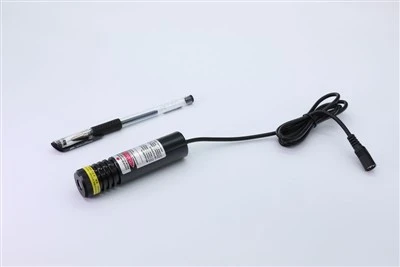
Let’s start with the basics that matter to people who actually do bench work: what even is a fiber coupled laser module? It’s basically a laser source where the light’s been channeled through a fiber optic cable (usually single-mode for tight focus, multi-mode for more power) instead of being a bare beam. For research, that tiny fiber tip is a game changer. Back in the day, if you needed a laser aimed at a tiny sample or inside a microscope, you’d mess around with mirror mounts, alignment tools, and hours of tweaking just to get the beam to not drift. Now? Just plug the fiber into your microscope’s port or a small positioning stage, and you’re good to go. No more alignment nightmares that eat up half your lab day.
I’ve had undergrads email me saying their $500 fiber module replaced a $10k lab laser they were waiting 6 weeks to get. Don’t get me wrong, high-end research lasers have their place, but fiber modules fill a gap way too many researchers overlook. Let’s break down the use cases that I see every single week from uni labs, government research centers, and even some startup R&D teams.
First up: material science. If you’re doing anything from etching tiny patterns on graphene to testing how polymers degrade under continuous light, you need a laser that’s stable and easy to aim. Fiber modules give perfect, consistent power output (no weird spikes mid-experiment that ruin your data) and the fiber lets you reach really specific spots—like inside a microfluidic chip, which is super tiny, or across a small sample stage. I remember a team at a state university testing metal alloys for next-gen batteries; they used a 405nm fiber module to etch tiny reference marks on their electrode samples, and they said it was way more accurate than the old handheld lasers they’d used before. No stray light messing up their other tests, either—fiber couples contain the beam so it only hits where you want it.
Next, physics and quantum research. This is where stability is non-negotiable. If you’re doing quantum dot spectroscopy or laser-induced fluorescence (LIF), a wobbly beam is going to give you garbage data. Fiber coupled modules have super low beam divergence, which means the beam stays tight even when you’re focusing it through a microscope objective (that’s the thing at the end of a microscope that makes things look bigger). I talked to a quantum optics lab last month that switched from a bulk laser setup to a 785nm single-mode fiber module for their photonics experiments. They said their alignment time dropped from 4 hours a day to 10 minutes, and their data had half the noise it used to. Bulk lasers also heat up a lot, which can mess with sensitive optical equipment—fiber modules are sealed, so they’re way more temperature-stable. That’s a huge win when you’re running experiments that need 12+ hours of continuous data collection.
Then there’s life sciences and biomedical research. If you’re using lasers for things like photopolymerization (making tiny 3D cell scaffolds) or photodynamic therapy (testing cancer treatments), you need a laser that’s compatible with standard lab tools—like microscopes, flow cytometers, or even portable setups for field work. The small size of fiber modules (most are about the size of a soda can, not a giant rack-mounted laser) makes them perfect for benchtop setups, and the fiber lets you thread the beam exactly where you need it in a petri dish or a cell culture plate. I’ve even had a team from a bio research institute use a fiber module for in-vivo imaging of small animals—they could maneuver the fiber through their imaging setup without moving the whole laser, which was a nightmare before. And since these modules come in all sorts of wavelengths (from UV to near-IR), you can find one that matches whatever your specific assay or imaging technique needs—no custom builds required.
Wait, but what about power? I know a lot of researchers worry fiber modules don’t have enough oomph for their work. But that’s not true—we make modules with power levels from 1mW (super low for sensitive bio work) up to 50W, and even higher if someone needs it for material processing or ablation. The multi-mode ones are great for higher power applications, and they still keep the beam consistent. One of my regular customers is a materials lab doing laser ablation for mass spectrometry; they use a 20W fiber module, and they say it’s way more reliable than the tube-based lasers they used to use, which would break down every few months and cost a fortune to repair. Fiber modules are solid-state, so there are no moving parts (well, almost—just the diode inside, which is built to last). That means less downtime for repairs, which is massive for research teams on tight deadlines.
Now, let’s talk about the stuff that makes fiber modules stand out for research vs. other lasers: affordability and accessibility. Custom research lasers can cost tens of thousands of dollars, have long lead times, and require specialized staff to align and maintain them. Fiber coupled modules? We ship them in 3-5 business days (most standard models), they’re plug-and-play, and they cost a fraction of the price of a bulk laser with similar specs. I’ve had small college labs with tight budgets reach out to me, and they say they can now run experiments they couldn’t even dream of before because they don’t have to drop a semester’s lab budget on a laser. And for researchers who need to test multiple wavelengths or power levels? We have off-the-shelf models in every common research wavelength, so you can swap them out without custom ordering anything. That’s perfect for feasibility studies or preliminary experiments where you don’t want to sink a ton of cash into something that might not work.
But wait, I should be honest—fiber modules aren’t for every research project. If you need ultra-high power for large-scale industrial laser cutting, maybe not, but for 90% of academic and R&D research? They’re ideal. The only catch is making sure you get the right specs: wavelength, power, fiber type (single vs multi mode), and beam quality. That’s why we’re not just selling modules—we help researchers figure out exactly what they need, not upsell them on something they don’t. For example, a team doing fluorescence microscopy doesn’t need a 50W module—they need a low-power, stable 488nm single-mode fiber. We’ll tell them that instead of pushing a higher power model, which would be a waste of money and could even damage their samples.
Another big plus for research: consistency across experiments. One of the biggest pain points for researchers is that their laser output can drift over time, or two different lasers might have slightly different wavelength or power, making it hard to compare data from different runs. Fiber coupled modules have very tight tolerances, so every module we ship has a power output within +/-5% of the rated value, and wavelength within +/-1nm. That means when you run an experiment today vs. next month, your laser is going to behave exactly the same way. We also calibrate every module before it ships, so you don’t have to do that yourself—more time doing actual research, less time in the optics lab.
I’ve seen first-hand how fiber coupled lasers have changed research. A few months back, a team at a national lab reached out because their old laser was so finicky they had to pause a project on next-gen solar cell materials for 6 months waiting for a replacement part. We sent them a custom 532nm fiber module that fits their existing setup, and they were back up and running in 2 days. They later told me their data was actually more consistent than it was with the old bulk laser, because the fiber didn’t have alignment drift. That’s the kind of win that matters for research—no more waiting around for broken gear, no more messy data from unstable sources.
So, if you’re a researcher asking yourself “should I use a fiber coupled laser module for my work?” the answer is almost always yes—you just need to pick the right one for your specific experiment. Whether you’re a grad student working on a side project, a postdoc running a long-term study, or a senior researcher setting up a new lab, these modules are flexible, reliable, and way easier to work with than the old-school laser setups.
Before I wrap this up, a quick note for anyone looking to pick one: don’t waste time sifting through generic industrial products. Reach out to a supplier that knows research gear, not just industrial cutters. We work with researchers every day to tweak specs, answer questions, and make sure you get something that fits your work, not just checks a box. No sales jargon, no hidden fees, just modules that work for real lab applications. If you’re tired of dealing with overpriced, high-maintenance lasers that slow down your experiments, hit us up to talk through your needs. We can even help you compare your current setup to a fiber module to see how much time and money you could save.
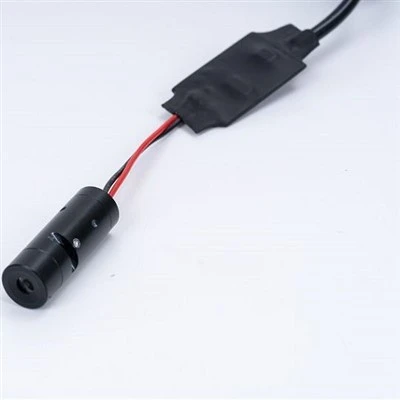
At the end of the day, research is about pushing limits, not fighting with lab equipment. Fiber coupled laser modules take a lot of the headache out of laser setups, so you can focus on the science that matters. Whether you’re etching tiny samples, imaging cells, or testing new materials, these modules are proven, reliable, and accessible for research use. If you’re ready to stop dealing with laser alignment nightmares and inconsistent data, let’s chat about the right module for your project.
Structured Light Laser Modules References:
- Optical Fiber Technology for Fiber-Coupled Lasers, Journal of Laser Applications, 2022
- Fiber Coupled Laser Modules in Biomedical Research, Biomedical Optics Express, 2021
- Stability of Fiber Coupled Diode Lasers for Scientific Experiments, Applied Optics, 2020
- Cost-Effective Laser Solutions for Academic Research Labs, Journal of Research Equipment, 2023
Changshu Desheng Optics Electronics Co., Ltd.
As one of the most professional fiber coupled laser modules manufacturers and suppliers in China, our products have good reputation in the market. Please feel free to buy advanced fiber coupled laser modules for sale here from our factory. Good service and quality products are available.
Address: 8A, Yineng science and technology industrial park, No.183, Yinhe Road, Southeast Development Zone, Changshu, Jiangsu Province, China.
E-mail: desheng1@dershinelaser.com
WebSite: https://www.ds-lasers.com/
