If you’ve ever taken a bite of a snack that tasted “off” — not the expired, sour kind of off, but something dulled, metallic, or just not quite right — you might have blamed the food itself. As a food packaging bags supplier, I’ve lost count of how many times I’ve heard that from customers: “Our chips used to taste so much better,” or “Our granola bars have a weird aftertaste since we switched suppliers.” For years, I wrote those comments off as small-batch variability or a fluke in distribution. But a few years back, when we had a batch of our custom snack bags come back with nearly 20% of client feedback mentioning a “plastic aftertaste,” I dug into the science. What I found changed how we design every single packaging bag we make today, and it might just change how you think about every bag of chips, cereal, or frozen meal you grab off the shelf. Food Packaging Bags

Let’s start with the basics: food packaging isn’t just a wrapper. It’s a barrier between your product and the outside world, meant to keep out moisture, oxygen, light, and contaminants that would make food go bad too fast. But that barrier isn’t always one-sided. Chemicals or compounds from the packaging can move the other way — into the food. This isn’t just a myth; it’s a well-documented scientific process called migration.
Not all migration is created equal, though. It depends on three big factors: what the packaging is made of, what kind of food it’s touching, and how long and how the food is stored. For example, high-fat foods (think cheese, peanut butter, or fried snacks) are way more likely to absorb compounds from packaging than low-fat foods like plain crackers or soda. Heat also plays a huge role: food that’s microwaved in a plastic wrapper, or stored in a hot garage or sunlit pantry, speeds up that migration. Even light matters — UV rays can break down packaging materials into smaller, more mobile compounds that can seep into food.
Early on, I learned that a lot of the “plastic taste” people notice comes from something called oligomers. These are small molecules that form during the manufacturing of plastic packaging materials like polyethylene (the most common plastic for food bags). When manufacturers melt plastic to form bags, these oligomers can break free, and if they don’t get removed during the bag finishing process, they can transfer into food. That’s exactly what happened with our bad batch a few years back: one of our production lines had a faulty rinsing step that left excess oligomers in the bags, and when our client’s high-fat cheese sticks were stored in them for two weeks, the cheese absorbed those compounds, creating a mild, unpleasant plastic aftertaste.
But it’s not just oligomers. Some plastics are made with additives — things like plasticizers, stabilizers, or dyes — that make the plastic flexible, durable, or resistant to tearing. A lot of these additives are regulated by food safety agencies, like the FDA in the U.S. or EFSA in the EU, because they can be toxic in high amounts. But even at levels that are considered “safe,” small migrations can change the flavor of food. I remember testing a client’s frozen berry line once: they were using a budget bag made with a cheap dye that had a mild citrus scent. After three months in a freezer, the berries had picked up that citrus note, which sounded like a marketing win until people started writing in saying the berries tasted “fake.” No one wanted their wild blueberries to taste like artificial orange, even if it wasn’t unhealthy.
There’s also the issue of scent transfer, which is closely tied to taste. Taste and smell are so linked that 80% of what you perceive as taste actually comes from your sense of smell. So if your packaging absorbs and holds onto the scent of one food, it can transfer that scent to another. I had a client who sold both potato chips and caramel corn, and they were using the same storage facility for both products’ unprinted bags. The caramel corn bags absorbed the sweet, buttery scent from the chip bags, and when the caramel corn was sealed, that scent made its way into the product. Customers complained that the caramel corn tasted like salty chips, not sweet corn. That’s a classic example of cross-contamination from packaging materials, not from the food itself.
Now, you might be wondering: if this is such a common problem, why don’t companies just use plain paper bags? Well, paper has its own issues. Paper is porous, so it can absorb moisture and let oxygen in, which makes food go stale fast. It also has its own natural compounds, like lignin, that can create a woody or bitter taste if it’s not treated properly. Coated paper bags, the ones you see for bread or cookies, use a thin plastic layer to make them moisture-resistant, so they have the same migration risks as plastic bags. The key is choosing materials that are tailored to the specific food they’re holding, not a one-size-fits-all approach.
At our company, we’ve spent years researching and testing materials to minimize flavor transfer. We don’t just use generic polyethylene for every client; we match the bag material to their product. For high-fat snacks like cheese puffs and nut bars, we use a high-density polyethylene (HDPE) that’s been specially processed to remove excess oligomers and has a tight barrier layer to prevent migration. For frozen foods, we use a multi-layer film that’s both flexible and resistant to temperature changes, so it doesn’t break down and leach compounds even after months in a freezer. For products that need to stay fresh for a long time, like grains or dried fruit, we use packaging that has an added oxygen scavenger, which not only keeps food from going stale but also reduces the breakdown of packaging materials that can cause off-flavors.
We also work closely with our clients to educate them about storage and handling, because even the best packaging can’t fix poor storage. For example, if a client’s warehouse is too hot, even our highest-quality bags might have a small amount of migration over time. So we provide them with guidelines on proper storage temperatures, how long products can stay in packaging before being shipped, and even tips on how to print their labels without adding extra compounds that could transfer. A lot of suppliers skip this step, but we’ve found that it’s just as important as the bag itself when it comes to protecting flavor.
I’ve seen firsthand how small changes in packaging can make a huge difference in a product’s reputation. Not long ago, a small craft granola client came to us frustrated because their granola had a “plastic aftertaste” that was hurting their sales. They were using a cheap, uncoated poly bag that was designed for bulk storage, not for individual retail packaging. When we switched them to a multi-layer plastic bag with a food-grade inner liner, they reported that 90% of the aftertaste complaints disappeared within a month. Customers wrote to say the granola tasted “like fresh oats again,” not like the bag it was in. That’s the impact good packaging can have — it’s not just keeping food safe, it’s preserving the flavor that makes customers come back.
Of course, there are still a lot of unknowns when it comes to packaging and flavor. As we move toward more sustainable packaging — things like biodegradable plastics, plant-based films, and compostable bags — we’re discovering new flavor challenges. Many plant-based films, for example, are made from corn or sugarcane, and they can have a mild, earthy or grassy taste that transfers to food, especially if the food is low-flavor, like tea or rice. We’ve been testing these materials for years, tweaking the manufacturing process to remove those natural plant compounds, and we’re already able to offer sustainable packaging options that don’t create off-flavors. It’s a balance between doing right by the planet and doing right by the product’s taste, and we take that balance very seriously.
As a food packaging bags supplier, my job isn’t just to sell bags — it’s to help my clients keep their food tasting the way it’s supposed to. I’ve seen too many great products fail because of a bad bag, and too many customers miss out on their favorite snacks because of an unnoticed off-flavor. The science of packaging and flavor is complex, but it’s not rocket science: choose the right material for the right food, process that material correctly to remove compounds that can transfer, and work with your supplier to store and handle products properly.
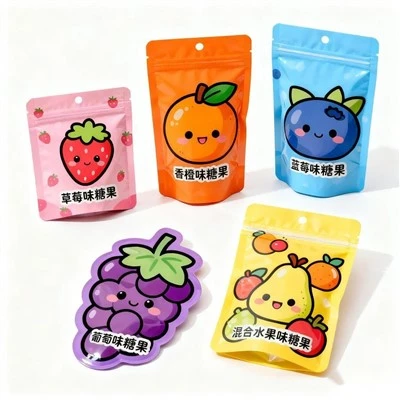
If you’re a food brand owner struggling with flavor issues from your packaging, or if you’re looking to upgrade your packaging to preserve taste and freshness, we’re here to help. We don’t just offer one-size-fits-all solutions; we work with each client to design custom packaging that fits their product, their budget, and their standards for flavor and quality. Whether you’re making snacks, frozen meals, baked goods, or any other food that relies on great taste, our team has the expertise to create packaging that keeps your product tasting exactly as it should. Reach out to our procurement team to start a conversation, and let’s figure out the best packaging solution for your needs.
Food Packaging Bags References
- Hansen, H. C., et al. (2019). Migration of plastic oligomers from food packaging: A review of analytical methods and sensory impacts. Journal of Food Science, 84(10), 2892-2901.
- Fox, J. A., et al. (2021). The role of packaging materials in flavor transfer to high-fat food products. Food Packaging and Shelf Life, 29, 100687.
- European Food Safety Authority (EFSA). (2022). Safety assessment of plastic additives used in food contact materials. EFSA Journal, 20(5), 721-756.
- Kim, S., & Lee, M. (2020). Flavor transfer between packaging and food: Mechanisms, testing methods, and mitigation strategies. Critical Reviews in Food Science and Nutrition, 60(15), 2589-2603.
- Zhang, L., et al. (2023). Compostable food packaging: Challenges in flavor preservation for fresh and processed foods. Journal of Cleaner Production, 402, 136892.
Shandong Yiming Plastic Products Co., Ltd.
As one of the most professional food packaging bags manufacturers in China, we’re featured by quality products and good price. Please rest assured to wholesale cheap food packaging bags made in China here from our factory. Customized orders are welcome.
Address: Opposite Tower Pole Factory, south of Hengliu road, Shunwang Sub-district, Zhucheng City, Weifang City, Shandong Province
E-mail: sdyiming16888@qq.com
WebSite: https://www.toppackingsolution.com/
