When I first started working in fused cast refractory supply over a decade ago, I used to field a lot of the same question from plant engineers and operations managers: “How hot is ‘hot enough’ for these bricks?” Back then, I’d rely on rough guidelines I’d learned in trade school—numbers that worked for most basic applications, but failed when a customer was dealing with a high-temp glass furnace or a steel ladle that ran a few degrees above the norm. Over the years, I’ve learned that temperature rating for fused cast refractories isn’t a one-size-fits-all number scribbled on a spec sheet. It’s a balance of material composition, manufacturing process, and the exact conditions a refractory will face in the field. Today, I want to break that down the way I walk new clients through it—plain, practical, and rooted in the real-world data we use every day to supply products that stand up to the heat. Fused Cast Refractory
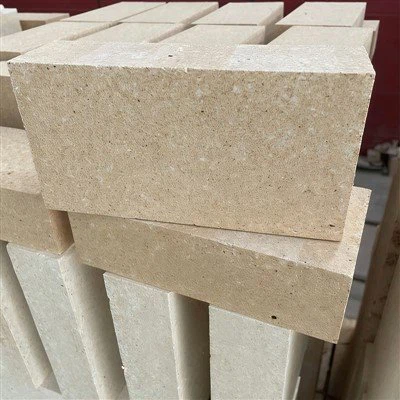
First, let’s get clear on what fused cast refractories even are, because that foundation makes the temperature rating make sense. Unlike shaped refractory bricks that are pressed from dry clay or granular material and fired in a kiln, fused cast refractories start by melting raw materials (alumina, zirconia, silica, and other additives) in an electric arc furnace at temperatures upwards of 2,000°C. Once fully molten, the liquid is poured into molds, where it solidifies slowly to form a dense, crack-resistant structure. That melting and casting process is why they’re so much more durable than other refractories—they have far fewer pores, and their crystalline structure is tightly fused together. It also directly shapes their temperature limits, because the materials and cooling process determine how well they can hold up under constant heat, thermal shock, and chemical attack.
Now, the temperature rating. This isn’t just the peak temperature the material can touch once before failing. It’s the maximum continuous operating temperature (MCO) and the maximum thermal shock temperature difference, plus a few other key metrics that actually matter to how a refractory performs in your unit. Let’s break down the main types of fused cast refractories and their ratings, because not all fused cast bricks are the same. The three most common are alumina-based (AZS), alumina-silica, and chrome-magnesia fused cast refractories, each with distinct temp ranges and use cases.
AZS refractories—alumina-zirconia-silica—are the workhorses of the fused cast world, used most often in glass furnaces, which are where a lot of our customers operate. Standard AZS bricks, the ones we supply for basic soda-lime glass tanks, have a maximum continuous operating temperature of around 1,600°C. Wait, that’s not the melting point of the material—AZS’s liquidus temperature (the point at which it turns fully molten) is closer to 1,800°C, so why isn’t the operating temp higher? Here’s the catch: refractory temperature ratings are about more than just not melting. At sustained temps near the liquidus, the material starts to soften, even if it’s still solid, which makes it prone to deformation under the weight of the furnace structure. That softening leads to creep, which cracks the brick over time, or causes it to bulge, which ruins the furnace lining and leads to unplanned downtime. So we build in a safety buffer. For standard AZS, that buffer puts the continuous operating temp at ~1,600°C, which works perfectly for most window glass and container glass furnaces that run between 1,500°C and 1,580°C. But if your furnace runs hotter—say, 1,600°C or more, or you’re working with borosilicate glass, which requires higher melting temps—we have high-purity AZS, often called “fused cast high-zirconia AZS.” Those have a zirconia content of 33% or higher, and their MCO jumps to 1,650°C. Some specialty grades even hit 1,700°C continuous, though those are for very specific high-temperature glass applications like fiberglass furnaces.
Next, alumina-silica fused cast refractories, sometimes called high-alumina fused cast. These are less common than AZS, but they’re critical for applications where chemical resistance to slags or acids is a bigger concern than pure heat. Their temperature rating is lower, around 1,550°C continuous, but they hold up far better than AZS when exposed to acidic slags, which eat away at fused cast materials over time. I’ve seen these used in cement kiln preheater zones and non-ferrous metal smelting hearths, where the combination of heat and chemical attack would turn a standard AZS brick to mush in a matter of months. The tradeoff is their lower temp limit—if you run a 1,500°C furnace with alumina-silica, it will last, but if you crank it to 1,580°C, you’ll start seeing cracks and spalling within a year instead of the 5+ years you’d get with a properly sized AZS.
Then there are chrome-magnesia fused cast refractories, the heavy hitters for steel and non-ferrous metal processing. These have a much higher temperature rating, with MCO ranging from 1,700°C up to 1,800°C for specialty grades. Why so high? Steel ladles, electric arc furnaces (EAFs), and copper smelters run at way higher temps than glass furnaces—EAFs regularly hit 1,700°C to 1,800°C, and molten steel is around 1,600°C to 1,700°C when poured. Chrome-magnesia fused cast is designed to handle that constant, high heat, plus the extreme thermal shock that comes with tapping a ladle or pouring molten metal into a mold. But here’s a note: their high temp rating comes with a caveat. They’re not as good at resisting alkali attacks, which are common in some glass furnaces, so they’re almost never used for that application. We supply chrome-magnesia exclusively to metal processing clients, and we always make sure they understand that even though the material can handle 1,800°C, their operating temp will often be set 50°C to 100°C below that to account for the slag and mechanical stress in their units.
A lot of customers I work with make the mistake of looking only at the peak temperature number, but that’s not the whole story. Thermal shock resistance is a huge part of what makes fused cast refractories useful, and it directly ties to temperature. Thermal shock is when a material goes from hot to cold quickly, or vice versa, and expands or contracts unevenly, leading to cracks. Fused cast refractories have better thermal shock resistance than pressed bricks, but their performance drops the bigger the temperature change. For example, a standard AZS brick that’s rated for 1,600°C continuous will handle a thermal shock of up to 300°C—meaning you can heat it from room temp to 300°C, or cool it from 1,600°C to 1,300°C, without cracking. But if you have a unit where you cycle the temperature by 400°C every day, that same brick will fail much faster, so we’ll recommend a higher-grade AZS or a different material that can handle bigger temp swings.
Another factor that almost no spec sheet lists, but every veteran refractory supplier knows: actual operating temperature vs. measured temperature. A lot of plant engineers will tell you their furnace runs at 1,600°C, but that’s the temperature inside the molten material, not the temperature of the refractory brick lining. The brick’s surface is exposed to that heat, but the back side of the brick (the side against the furnace shell) is much cooler, sometimes only 500°C to 800°C, depending on insulation. The critical temp for the refractory is the hot face temperature—the side touching the molten material or hot gases. That’s why we do site audits for new clients all the time: we’ll measure the hot face temp of their current lining, check what kind of slag they’re dealing with, and recommend a material whose temperature rating matches that exact temp, not just the number they pull from a manual. I once had a glass plant manager who insisted his furnace ran at 1,550°C, so he ordered standard AZS rated for 1,600°C. When we did an audit, we found the hot face temp was actually 1,620°C, 20 degrees higher than his number. The bricks he ordered would have failed in 6 months instead of the standard 3 years. We swapped him for the high-zirconia AZS, and his lining has now lasted twice as long as the previous one.
I also want to touch on how manufacturing variations affect the temperature rating, because not all fused cast refractories are made equally. When I was just starting out, I visited a smaller supplier overseas that was making fused cast bricks with a 32% zirconia content, same as our high-zirconia AZS, but their melting process was off—they didn’t hold the molten material at temperature long enough, so some impurities were left in the crystalline structure. The spec sheet said a 1,650°C rating, but in real use, those bricks failed at 1,580°C, way lower than advertised. That’s why we only work with suppliers whose production processes we’ve tested and approved, and why we test every batch we receive for liquidus temperature and crystalline structure. The temperature rating on a brick is only as good as the process that made it. We recently had a client switch from a no-name fused cast refractory supplier to us, and his lining life went from 18 months to 42 months, even though he was running at the exact same temperature. The difference was in the quality of the fused cast structure—ours was denser, with fewer impurities, so it could hold up to the heat longer.
Another common question: can I use a higher temperature rated refractory to make my lining last longer? On paper, that makes sense, but in practice, it’s not always worth the cost. A high-zirconia AZS brick rated for 1,700°C costs 20 to 30% more than a standard AZS rated for 1,600°C. If a plant is running their furnace at 1,550°C, the standard AZS will last 3 years, and the high-rated one will last 4 years, but the extra cost per brick doesn’t offset the longer lifespan. We only recommend the higher-rated materials when the operating temp is near the lower material’s limit, or when thermal shock is a major factor. I had a steel mill client who tried using a 1,800°C chrome-magnesia brick in a section of their ladle that only ran at 1,650°C, because their old supplier told him “higher temp means longer life.” It cost him $12,000 more for the bricks, and the lifespan was almost identical to the cheaper, properly rated chrome-magnesia. That’s the kind of mistake we work hard to help clients avoid, because at the end of the day, it’s not just about temperature rating—it’s about matching the rating to your exact operating conditions.
So, to circle back to the original question: what is the temperature rating of fused cast refractories? It’s not a single number. It’s a range, tailored to the material’s composition, the application’s operating temp, thermal shock resistance, and chemical environment. For the most common grades: standard AZS tops out at 1,600°C continuous, high-zirconia AZS at 1,650°C (some specialty grades up to 1,700°C), alumina-silica fused cast at 1,550°C, and chrome-magnesia at 1,700°C to 1,800°C continuous. But those are just starting points. The real rating is what works for your unit, which is why we always encourage clients to share their exact operating details, or even schedule a site visit to assess their furnace or kiln, before recommending a product.

If you’re currently having issues with refractory lining failures, unplanned downtime, or just want to make sure you’re using the right fused cast material for your temperature conditions, we’re here to help. We don’t just supply bricks—we work with you to understand your process, test the conditions in your facility, and provide a tailored solution that fits your needs and budget. Whether you’re a glass plant manager dealing with a refractory lining that’s corroding too fast, a steel mill engineer looking to extend ladle life, or a cement plant operator needing to handle high-temperature slags, we have the fused cast refractories you need, with temperature ratings tested and proven for real-world use. Reach out to us to discuss your requirements, and we’ll help you find the right solution for your operation.
Sintered Refractory References
- “Fused Cast Refractories: Properties and Applications.” European Refractory Technology Association (Euroma), 2022.
- Singh, R. et al. High-Temperature Refractory Materials for Industrial Applications. CRC Press, 2019.
- “Temperature Rating Guidelines for Fused Cast Aluminosilicate and Zirconia Refractories.” International Ceramic Society (ICS), 2021.
- Thermal Shock Resistance in Refractory Materials: Testing and Performance Analysis. Journal of the American Ceramic Society, Vol. 104, No. 3, 2020.
Zhengzhou Dezhong Corundum Materials Co., Ltd.
We are one of the most professional fused cast refractory manufacturers and suppliers in China, specialized in providing high quality customized service for global clients. We warmly welcome you to buy high-grade fused cast refractory made in China here from our factory.
Address: Yuhuangmiao Village, Goutang Town, Xinmi City, Henan Province
E-mail: zzdz@dzrefactory.com
WebSite: https://www.dzrefactory.com/
