If you’re new to CNC turning, you’ve probably heard your machine operators throw around terms like spindle speed, SFM, or RPM like they’re second nature. When we first started our CNC turning supply business, I used to scratch my head over these terms too—until I realized just how much spindle speed can make or break a part run, a tool life, and even your bottom line. Today, I’m breaking this down like I would for one of our clients who’s just getting their feet wet with CNC turning. CNC Turning Machine
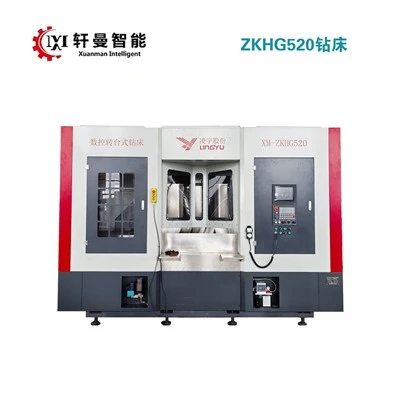
First off, let’s keep it simple: spindle speed (most of us just call it “RPM” in the shop) is how fast the spindle on your CNC turning machine spins the workpiece. That’s it. No fancy jargon, no overcomplicating it—at its core, it’s just a measure of revolutions per minute, how many times that round part in your chuck makes a full circle every 60 seconds. But here’s where it stops being basic and starts mattering: that number directly dictates how smoothly your cut is, how long your cutting tools last, and whether you walk away with a finished part or a scrap pile.
I’ve seen new shop owners set their RPM too high right out the gate, or way too low, and both are headaches. Let’s say you’re turning a solid aluminum bar. If you crank the RPM way up (like 3,000 or more) on a cheap, dull carbide insert, that aluminum will start smearing instead of cutting clean. The tool will wear out in 10 parts instead of 100, and you’ll be replacing tools twice as often—wasting money you could be putting back into your shop. On the flip side, if you run a hard steel alloy at 500 RPM when it should be at 1,200, you’re basically dragging the tool through the material instead of cutting it. That causes excessive heat, strains your spindle, and can even warp your workpiece because of all the force you’re applying.
Now, a lot of folks mix up spindle speed with surface feet per minute (SFM), which is where the real confusion hits. SFM is the actual speed of the cutting edge moving against the workpiece surface, right? Since RPM is how fast the workpiece spins, you need to factor in the diameter of your part to get SFM. The formula is simple: SFM = (RPM × π × diameter) ÷ 12. Let’s do a quick example to make it real. If you’re turning a 2-inch diameter aluminum part at 1,500 RPM, your SFM works out to around 785. That’s a good number for most aluminum turning. But if that same part was 4 inches in diameter at the same 1,500 RPM, your SFM jumps to almost 1,570—way too high for that same tool, and you’ll blow through the insert in no time.
That’s why most modern CNC turning machines (the kind we supply) don’t just let you input RPM—you can often input SFM, and the machine automatically calculates the correct RPM based on your part diameter. We’ve had so many clients come to us saying they were getting inconsistent part finishes and short tool life, and once we walked them through matching their RPM to SFM for their material, their scrap rate dropped by 30% almost overnight. That’s the kind of small, tweak that makes a huge difference in production.
But spindle speed isn’t a one-size-fits-all number. It changes based on three big factors: the material you’re cutting, the type of cutting tool you’re using, and the finish you’re after. Let’s break those down. First, material: soft stuff like aluminum, brass, or mild steel can handle way higher RPM than hard materials like stainless steel, titanium, or hardened tool steel. I remember a client who was trying to turn a 3-inch 304 stainless steel part at 1,000 RPM—we told him he needed to crank that down to around 500, and when he did, his tool life went from 20 parts per insert to 120. He was shocked he hadn’t asked earlier, but that’s the thing—when you’re new to CNC, it’s easy to guess instead of relying on the basics.
Next, cutting tools. Carbide inserts (the most common for turning) have recommended SFM ranges printed on the package or the manufacturer’s spec sheet. High-speed steel (HSS) tools, which are cheaper but softer, need way lower RPM—think half or a third of what you’d use for carbide. If you use a HSS tool at carbide RPM, it’ll overheat and dull in seconds. We always tell our clients to keep a cheat sheet of SFM ranges pinned up near their CNC turning machines—no one wants to stop mid-run to Google a tool spec. It saves time, and time is money in this business.
Third thing: finish. If you’re making a rough part that only needs to fit together, you can run a bit higher RPM to speed up production. But if you’re making something like a medical component or a aerospace fitting that needs a mirror-smooth surface, you’ll want to drop the RPM a little and use a sharper insert. Why? Higher RPM can cause vibration, even if it’s subtle, which leaves tiny ridges on the part surface. Slow it down just a touch, and that vibration fades, giving you a way cleaner finish. I’ve had clients who make custom engine parts for race cars tell us they tweak their RPM by 50 or 100 just to get that perfect surface texture, and it makes all the difference when they’re sending parts to their customers.
Another thing a lot of people don’t talk about: your CNC turning machine’s capabilities matter too. Some budget machines can’t handle high RPM without spindle runout, which is when your workpiece wobbles a little as it spins. That wobble makes your cuts inconsistent, and if you run too fast, it can damage your chuck or even throw the part. That’s why we build our CNC turning machines with rigid spindles designed for stable RPM even at high speeds—no wobble, no unexpected part movement, so our clients can push the RPM as much as their tools and material allow without the machine holding them back. We’ve seen clients buy cheap overseas machines that can’t hold a steady RPM, and they end up wasting more in scrap parts than they saved on the machine. It’s a tradeoff that’s worth mentioning.
Wait, let’s talk about common mistakes new CNC operators make with spindle speed. First, they don’t adjust RPM when changing part diameter. Like, if you’re turning a 1-inch part and then jump to a 3-inch part without recalibrating, your SFM will jump even if RPM stays the same, and that’s a recipe for tool failure. Second, they ignore SFM specs for their material. I’ve seen guys run titanium at aluminum RPM—total disaster, they were burning through inserts and ruining parts left and right. Third, they forget about spindle load. If you’re taking a deep cut, you can’t run as high RPM as you would for a light finishing pass. Deep cuts need lower RPM to avoid straining the spindle and dragging the tool through the material. That’s another thing our CNC turning machines do well—they have load monitors that adjust RPM automatically if you’re pushing too hard, so you don’t have to babysit it.
So, how do you pick the right spindle speed for your job? It’s not rocket science. Start with your material’s recommended SFM. Aluminum is usually 500-1,500 SFM, brass is 600-2,000, mild steel is 100-500, stainless is 50-200, and titanium is 30-100. Then plug your part diameter into that RPM formula we talked about earlier, or just let your CNC machine calculate it if it has SFM input. Once you get a base number, tweak it: if the finish is rough, drop RPM by 100-200; if the tool is wearing too fast, check if you’re over SFM, or if your cut depth is too high. It’s a cycle, but once you do it a few times, it becomes second nature.
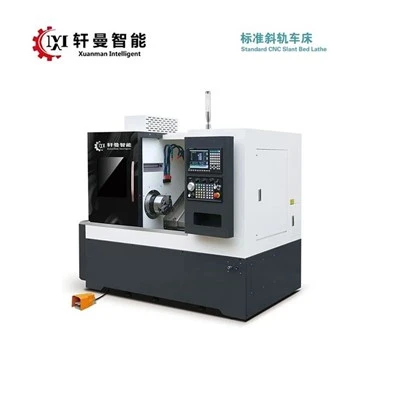
At the end of the day, spindle speed is one of the most impactful variables in CNC turning, and it’s also one of the easiest to get right once you understand the basics. It’s not just a number on a screen—it’s the difference between a profitable run and a costly one, between a great part and a scrap one. If you’re in the market for a CNC turning machine that makes this part easier, with stable spindles, intuitive SFM input, and load monitoring, we’ve got you covered. We supply machines for small job shops all the way up to large production facilities, so whatever your size, we can help you dial in your spindle speed and get more out of every run. Don’t hesitate to reach out to us to chat through your specific needs—we’re here to help you make smarter decisions for your shop.
CNC Drilling Tapping Machine References:
- Modern Machine Shop. (2022). "CNC Turning Basics: Spindle Speed and Feed Rates"
- Tooling U-SME. (2021). "Surface Feet per Minute (SFM) Calculations for Cutting Tools"
- Machinery’s Handbook. (31st Edition). "Spindle Speed Recommendations for Turning Operations"
- Manufacturing Engineering Association. (2023). "Optimizing Spindle Speed for CNC Turning of Common Materials"
- Haas Automation. (2022). "CNC Turning Machine Operation Guide for Spindle Speed Control"
Jiangsu Xuanman Intelligent Equipment Co., Ltd.
As one of the most professional CNC turning machine manufacturers in China, we’re featured by quality products and low price. Please rest assured to buy discount CNC turning machine made in China here from our factory. Customized orders are welcome.
Address: No.1-1, Weier Road, Jieji Equipment Manufacturing Industrial Park, Sihong County, Suqian City, Jiangsu Province, China
E-mail: jsxmzn@163.com
WebSite: https://www.xm-machs.com/
