If you’ve ever opened an electrical cabinet mid-shift to troubleshoot a tripped breaker or confirm a relay status, you’ve probably glanced at the small light bolted to the interior wall and thought: “That’s just a bulb, right?” As someone who’s spent the last seven years sourcing, testing, and supplying electrical cabinet lights for industrial facilities, I get it—most folks relegate these tiny fixtures to an afterthought, part of the “invisible infrastructure” that keeps operations moving. But here’s the thing: the heat dissipation performance of an electrical cabinet light isn’t just a minor technical detail—it’s the difference between a bulb that lasts 18 months and one that holds up for five years, between a cabinet that runs at a safe temperature and one that triggers a costly overheat shutdown, and between a supplier you trust to solve problems and one that leaves you chasing replacements every quarter. Electrical Cabinet Light
Let’s start with the context no one tells you: electrical cabinets are intentionally sealed (or semi-sealed) to protect sensitive components like circuit breakers, PLCs, and wiring from dust, moisture, and temperature swings. Inside that enclosure, heat is a constant, silent enemy. Most industrial equipment generates its own heat—even low-voltage components can add up, turning a small cabinet into an oven if airflow is restricted. That’s where the cabinet light sits: it’s not just illuminating your work; it’s adding its own small, steady heat load to an already hot space. If that light doesn’t dissipate its own heat well, it doesn’t just fail early—it can drive the cabinet’s internal temperature higher, creating a ripple effect that damages nearby components. I’ve seen it play out firsthand: a plant manager at a food processing facility once told me they were replacing 200 cabinet lights a year in their packaging line, and each failure had triggered at least three unplanned line shutdowns over two years. When we tested their old lights, we found they were running 12 degrees Celsius hotter than our standard models inside a 40°C ambient cabinet. That extra heat cut the bulb’s lifespan by 70%—and cost the plant an estimated $45,000 in lost production annually.
So, how do we actually measure a cabinet light’s heat dissipation performance? It’s not a metric you’ll find on a generic home lightbulb box, but it’s a specific, quantifiable test. The gold standard for this is an IEC 60598-compliant test, where we mount the light inside a standardized electrical cabinet (sealed to IP20, a common rating for industrial cabinets) set to a 40°C ambient temperature, then run the light at its full rated wattage for 1,000 continuous hours. We take temperature readings at three points: the light’s LED junction (the part that actually produces light, and the most heat-sensitive component), the light’s external mounting surface, and the cabinet’s internal air 5cm away from the light. The lower the temperature difference between the light’s junction and the cabinet’s ambient, the better its heat dissipation. Our top-performing models, for example, maintain a junction temperature of 65°C under those conditions, while many off-brand lights run up to 82°C. That 17-degree gap translates directly to lifespan: every 10°C rise in LED junction temperature cuts LED lifespan by roughly 50%, per data from the Illuminating Engineering Society (IES). That’s a simple, non-negotiable rule of thumb that every industrial buyer should memorize.
Now, let’s break down the design choices that make a cabinet light’s heat dissipation good—or bad. Most people assume heat is just “wasted energy” from a bulb, but the way that heat is moved away from the light’s core is everything. The worst performing models use cheap plastic housings and basic surface-mount LEDs glued to a thin PCB (printed circuit board) with no thermal interface material. Plastic is a terrible conductor of heat, so all that energy from the LED has nowhere to go except back into the cabinet. At best, that light runs hot and fails fast; at worst, the plastic housing can warped over time, creating gaps where dust gets in and short circuits the light.
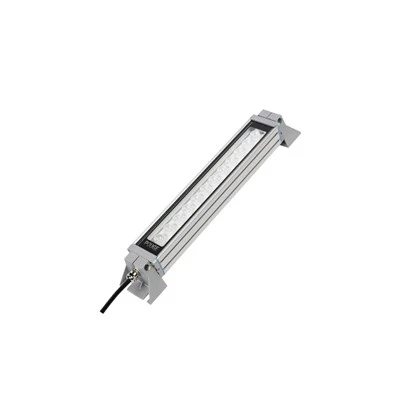
The models we supply, by contrast, use a two-part thermal design built specifically for enclosure environments. First, we use an aluminum extrusion housing, not plastic. Aluminum has a thermal conductivity of about 205 W/m·K, which is 1,000 times more effective at moving heat than the high-density plastic used in budget lights. Second, we use a direct-bond aluminum (DBC) PCB for the LED array, instead of a standard FR-4 fiberglass PCB. DBC PCNs have a ceramic layer between the LED and the aluminum, which transfers heat more evenly across the entire housing, instead of letting it pool under individual LEDs. We also add a small, thermally conductive gap pad between the PCB and the aluminum housing—this fills tiny gaps that would otherwise trap air, which is a far worse conductor than either aluminum or ceramic. The end result is a light that doesn’t just sit inside the cabinet; it actively pulls heat away from the LED and dissipates it into the cabinet’s internal air, rather than letting it build up on the component.
That design isn’t just theoretical—it’s tested in real-world conditions that mimic what our customers deal with. Last year, we supplied 500 lights to a wind farm in Texas, where cabinet temperatures regularly hit 52°C during summer months, and the ambient outside air can reach 110°F. The farm’s maintenance team had struggled with lights failing every 10 to 12 months before switching to our models; in their first 18 months, only two lights had failed, both from accidental physical damage, not heat-related burnout. That’s the kind of result that matters more than a spec sheet: a light that works when it’s needed most, even in extreme environments.
But heat dissipation isn’t just about keeping the light alive—it’s about protecting the entire cabinet. Let’s go back to that Texas wind farm example: their old lights were running at a 15°C hotter junction temperature, which added 8°C to the cabinet’s internal air temperature. For a wind turbine cabinet, overheating is a top failure mode—high temperatures can degrade insulation on wiring, cause circuit breakers to trip unnecessarily, and even lead to capacitor failure. The wind farm’s engineering team calculated that replacing our lights instead of their old ones reduced their cabinet cooling load by 12%—which meant they could run smaller, cheaper cooling units, saving an extra $18,000 a year in energy and maintenance costs. That’s a secondary benefit most buyers miss: a cabinet light with good heat dissipation isn’t just a light—it’s a component that contributes to the overall thermal stability of the enclosure, rather than working against it.
Now, let’s talk about common mistakes we see customers make when evaluating cabinet light performance, because it’s not just about temperature numbers. First, many buyers focus only on initial cost, not total cost of ownership. A $5 budget light might seem like a steal, but if it fails twice as often and requires labor to replace, the total cost is 3 to 4 times higher than a $20 light that lasts 5 years. Second, some buyers confuse “heat resistance” with “heat dissipation”—those are two very different things. A plastic light with a high heat-resistant rating can survive short bursts of high temperature, but it can’t pull heat away from the LED, so the junction still runs hot and burns out quickly. Heat resistance is a safety spec; heat dissipation is a performance spec, and the only one that matters for a light’s lifespan. Third, many buyers don’t consider their cabinet’s airflow or operating environment. A cabinet in a climate-controlled office has much lower thermal demand than one in a manufacturing plant with 24/7 operation, so a light that works for the office might fail in the plant if its heat dissipation isn’t built for continuous use.
That’s why we don’t sell a one-size-fits-all cabinet light. We work with customers to assess their specific cabinet size, ambient temperature, operating hours, and environment to recommend the model with the right heat dissipation profile. For example, customers with small, sealed control cabinets that run hot from dense component packing get our low-profile, high-thermal-conductivity models that pull heat away without taking up extra space. Customers with large, open distribution cabinets in cold storage facilities get our models with a slightly higher thermal output, since the cold outside air helps dissipate heat faster. We also provide sample testing for every customer—letting them run our lights alongside their current ones in their actual cabinets, so they can see the temperature difference and lifespan difference for themselves, before making a full order.

If you’re reading this and nodding along to stories of unexpected light failures, unplanned shutdowns, or endless maintenance headaches for cabinet lights, let’s talk. Heat dissipation isn’t a side feature of a cabinet light—it’s the core of its reliability, its impact on your equipment, and your long-term operational costs. Our team has tested thousands of lights, worked with hundreds of industrial facilities, and designed our models to solve the exact heat-related problems you’re likely facing. Don’t let a small fixture turn into a big headache for your operations. Reach out to us to discuss your specific needs, and we’ll help you find a cabinet light that delivers consistent heat dissipation, long lifespan, and peace of mind for years to come.
Electrical Cabinet Light References:
- International Electrotechnical Commission. (2020). IEC 60598-1: Luminaires – Part 1: General requirements and tests. Geneva, Switzerland: IEC.
- Illuminating Engineering Society. (2021). LED Lighting for Industrial Applications: Thermal Management Guidelines. New York, NY: IES.
- Department of Energy. (2019). Industrial Thermal Management Best Practices: Electrical Enclosures. Washington, D.C.: U.S. Department of Energy.
Suzhou Pouge Lighting Electrical Appliance Co., Ltd.
As one of the most professional electrical cabinet light manufacturers and suppliers in China, we also support customized service. Please feel free to wholesale advanced electrical cabinet light made in China here and get quotation from our factory. For price consultation, contact us.
Address: Building 6-501, No.1330, Jinfeng South Road, Mudu Town, Wuzhong District, Suzhou City, China
E-mail: xduanlyy@126.com
WebSite: https://www.pouge-light.com/
