If you’ve ever stood in a kitchen showroom or a home improvement store staring at floor-to-ceiling cabinetry, wondering why some tall units have two doors while others have three or even four, you’re not alone. As a tall cabinets supplier who’s been working closely with cabinet makers, remodelers, and homeowners for over eight years, I can tell you this question comes up more often than you might think—especially for folks picking out pieces for new builds or full kitchen overhauls. The thing is, there’s no one-size-fits-all answer, but there are standard guidelines that come from decades of manufacturing, ergonomics, and real-world use that most reputable suppliers follow. Let me break this down like I do for every customer who picks my brain about cabinet specs. Tall Cabinets
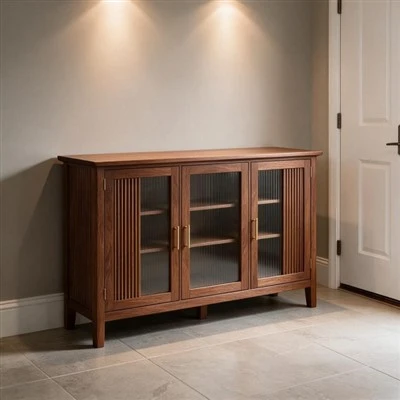
First, let’s get clear on what we mean by a “standard tall cabinet.” When I say standard, I’m talking about units that fit the typical dimensions used in North American and European cabinetry, since that’s been my core market. A standard tall cabinet runs from 84 inches to 96 inches in height (that’s about 7 feet to 8 feet), with a depth of 24 inches and a width that ranges from 12 inches (narrow pantries) up to 36 inches (wide storage cabinets for kitchens). These dimensions are non-negotiable for most homeowners because they fit standard ceiling heights in most homes, work with existing countertop and floor layouts, and are compatible with the standard shelf heights cabinet installers are trained to work with. When a customer calls me asking for a standard tall cabinet, this is exactly what they’re referring to—no custom cuts, no odd depths, no out-of-the-box heights. That’s important because door count ties directly to these fixed dimensions.
Now, the most common door count you’ll see for standard tall cabinets is two doors. Why? It’s all about ergonomics and weight. A single door on a tall cabinet would have to be at least 48 inches tall (if we split a 96-inch cabinet down the middle) to cover half the unit, and that’s a lot of weight for standard cabinet hinges to support. Think about it: a solid wood door that’s 24 inches wide and 48 inches tall can weigh 15 to 20 pounds, and when you swing it open all the way, that creates leverage that pulls on the hinges over time. Two doors split the height evenly, so each door is 42 inches tall in a 84-inch cabinet or 48 inches tall in a 96-inch cabinet—manageable sizes that most people can reach and operate without straining their shoulders. I’ve had customers come back to me saying they tried a single-door pantry cabinet for their small kitchen and could barely reach the back of the top shelf without a step stool, but two-door units solved that problem immediately. That’s the kind of real-world feedback that sticks with you when you’re designing products.
But wait, what about narrower standard tall cabinets? If you’re looking at a 12-inch or 18-inch wide pantry cabinet, two doors might not be practical. A 12-inch wide cabinet with two doors would mean each door is only 6 inches wide at the top, which is too narrow to be functional—you can’t fit a standard cereal box or a jar of pasta in a 6-inch wide door opening without it sticking out. So for narrow standard tall cabinets, the standard door count drops to one. That makes sense, right? A single 12-inch wide door is thin enough to swing open completely, and since it’s only 84 or 96 inches tall, most people can reach the top without too much trouble. I stocked up on these single-door pantry units last year for a client who was renovating a 100-year-old home with narrow hallways—they couldn’t fit a wider cabinet, so the 12-inch single-door one was perfect for storing canned goods and spices. It’s all about matching door count to width, not just height.
Now, let’s talk about the less common standard door counts, because they do exist for specific use cases. Some standard tall cabinets have three doors, but only for wider units. A 30-inch wide cabinet, for example, might have three 10-inch wide doors, which works great for divided storage—you can assign each door to a specific category, like baking supplies in the middle, snacks on the left, and cleaning products on the right. I’ve also seen three-door units for 84-inch tall pantries where homeowners want more frequent access to lower shelves and less need to reach the very top. The key here is that three doors only make sense for widths over 24 inches—anything narrower and the doors become too small and fussy to open. Four doors? That’s even rarer, reserved for extra-wide 36-inch standard tall cabinets. Four doors split the cabinet into four equal sections, which is ideal for large families who need separate storage for groceries, appliances, or small kitchen gadgets. But here’s the catch: even though these are technically standard size cabinets, they’re less common in small to medium homes, so most suppliers don’t keep them in stock year-round. I only offer four-door units as a special order, because not enough customers ask for them to justify holding inventory.
A lot of people get confused about whether door count changes with cabinet type, and I get that. Not all tall cabinets are for kitchens—some are for home offices, laundry rooms, or even bathrooms. For a standard tall linen cabinet in a bathroom, which is usually 24 inches wide, the standard is two doors, same as a kitchen cabinet. But if it’s a narrow 12-inch linen cabinet, it’s a single door. I had a customer last month who built a custom walk-in closet and needed three standard tall cabinets for shoes—two were 18 inches wide with two doors, and one was 12 inches with a single door. That flexibility is part of why standard tall cabinets are so popular. They’re not just for kitchens; they adapt to different spaces.
Another factor that influences door count is shelf configuration. A lot of standard tall cabinets come with adjustable shelves, but if you have a unit with built-in drawers at the bottom, that changes things too. For example, a standard 96-inch tall cabinet might have two doors on top and two drawers on the bottom, instead of four doors. In that case, the door count is two, not four, because the bottom section is drawers. I always advise customers to think about what they’re storing before picking door count—if they have a lot of heavy pots and pans, drawers at the bottom are easier to access than door shelves, so a two-door unit with drawers might be a better fit than a four-door one. I’ve had to correct a few customers who ordered a four-door cabinet thinking it would give them more storage, only to realize half the cabinet was drawers anyway, so the doors were unnecessary. That’s the kind of mistake I try to help people avoid by walking them through their needs.
Now, let’s get into the manufacturing side, because that’s where the standard comes from. When I was training with my old manufacturing partner in Italy, they told me that door count for standard tall cabinets is standardized to reduce waste and keep costs low. If every two-door cabinet uses the same hinge size, door material, and track hardware, suppliers can buy parts in bulk, which keeps the overall cost down for customers. If we started making custom door counts for every small order, the price would skyrocket. That’s why most suppliers stick to the core standards: single door for 12-18 inch wide cabinets, two doors for 24-30 inch wide cabinets, three doors for 36 inch wide cabinets, and four doors for special orders. It’s not about being rigid; it’s about keeping the product accessible and affordable for the average homeowner.
I also want to address a common myth that more doors mean more storage space. Some customers think a two-door cabinet has less space than a four-door one, but that’s not true. The internal volume of a standard tall cabinet is fixed by its height, depth, and width—door count doesn’t change how much space is inside. What changes is how you access that space. A two-door cabinet has two large openings, which are easier to load and unload, while a four-door cabinet has four smaller openings, which are better for organizing small items but require more bending and reaching. I always tell customers to prioritize access over number of doors when choosing, because a cabinet that’s hard to use, no matter how many doors it has, is a waste of money.
Over the years, I’ve worked with thousands of customers, and the most common request for door count is two. In fact, around 70% of the standard tall cabinets I sell are two-door units. That’s because they strike the perfect balance between accessibility, weight, and storage. I had a senior customer a few years ago who couldn’t lift heavy doors or reach high shelves, so we adjusted the shelf heights in their two-door cabinet to bring frequently used items to eye level, and installed soft-close hinges so the doors wouldn’t slam. That’s the kind of personal touch that comes from understanding not just the standard specs, but the person using the cabinet. Standard door counts are a starting point, not a rule you have to follow if you have unique needs.
Now, if you’re in the market for a standard tall cabinet and you’re still not sure how many doors you need, here’s a quick checklist I give all my customers: First, measure the width of the space where the cabinet will go. If it’s 12-18 inches, go with a single door. If it’s 24-30 inches, two doors will work best. If it’s 36 inches, you can choose three doors, but only if you need divided storage. Next, think about what you’ll store. If it’s heavy items like pots or canned goods, larger two-door or single-door cabinets will be easier to access. If it’s small items like spices or toiletries, three or four doors might help you stay organized. Finally, consider your physical needs—if you have trouble reaching high or lifting, avoid extra doors that mean more bending or small spaces.
Entry Storage Cabinets As a tall cabinets supplier, I’ve seen firsthand how the right door count can make a space functional, and the wrong one can be a hassle. I always encourage customers to work with someone who understands both the standard guidelines and the unique needs of their home. Whether you’re remodeling a kitchen, adding a pantry, or building a new home, don’t get stuck on the number of doors—focus on what works for you. If you need help picking the right standard tall cabinet for your project, feel free to reach out to discuss your needs. We can walk through dimensions, door counts, and storage configurations to find the perfect fit.
References
- National Kitchen and Bath Association. 2021. Kitchen Cabinet Dimensions and Installation Standards. NKBA Publications.
- European Cabinet Makers Association. 2022. Standard Tall Cabinet Specifications for Residential and Commercial Use. ECMA Technical Report.
- American Society of Interior Designers. 2020. Ergonomics for Kitchen and Storage Design. ASID Professional Guidelines.
- Kitchen and Bath Industry Association. 2019. Standardized Door Counting and Hardware Specifications for Tall Cabinets. KBIA Industry Standards.
- "Ergonomic Considerations in Residential Storage Cabinets." 2021. Journal of Interior Design, vol. 46, no. 2, pp. 45-58.
Zebra Living Furnishings Manufacturing Co.,Ltd
As one of the most professional tall cabinets manufacturers and suppliers in China, we offer a wide range of products with superior quality. We warmly welcome you to wholesale high quality tall cabinets made in China here from our factory. We also accept customized orders.
Address: No.7 Xianfeng Road, Heshi Industrial Zone, Taixing City, Jiangsu Province
E-mail: info@zaliving.com
WebSite: https://www.zaliving.com/
