Hey folks, if you’ve ever stood next to a 100-ton crane lifting a smelting furnace component or watched a 5,000-amp motor spin a ball mill grinding iron ore, you know metallurgical stuff is on a whole other level. As a metallurgical equipment supplier, I get asked all the time: “What kind of power do I even need for that big gear my site’s dropping next month?” It’s not just plugging a cord into the wall, trust me. Get this wrong, and you’re looking at downtime that costs thousands an hour—plus safety headaches no one wants to deal with. Metallurgical Equipment
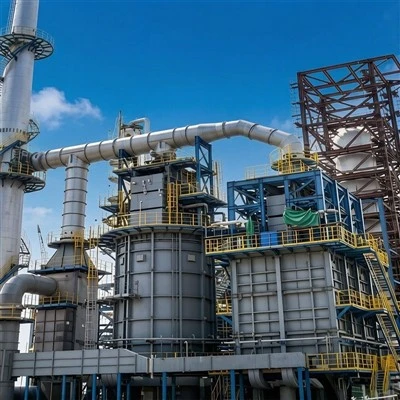
Let’s break this down like I’m chatting with a site foreman over a coffee, not writing a textbook. First, the big players in metallurgical gear: think rotary kilns, electric arc furnaces (EAFs), large ball mills, and continuous casters. Each of these doesn’t just “use power”—they need specific power types, not just voltage numbers. Let’s start with the heavy hitters that demand brute force: DC power for large rolling mills and ball mills. Wait, why DC? Back in the day, AC motors were great for constant speed, but when you need to adjust torque on a dime—like when a rolling mill is compressing steel slabs from 10cm to 1cm thick—DC’s your guy. It delivers instant, smooth torque, no jolts that could snap a gear or mess up the metal’s grain structure. Old school metallurgical sites used big synchronous motors with DC drives, but now we’ve got adjustable speed drives (ASDs) that convert AC to DC on the fly. I saw a site last year that tried to skimp on DC for their new 20-foot ball mill—ended up tripping the grid every time they cranked up the load, costing them $12k in lost production in a week. Lesson there: you don’t cut corners on DC for gear that moves thousands of tons of material.
Next up, EAFs and submerged arc furnaces (SAFs)—these are the ones melting scrap metal or ore into steel and ferroalloys, right? They don’t play around. These need massive AC power, like, not your standard 480V shop power. Most modern EAFs run on 11kV or 33kV, and some even go up to 66kV for the really big ones. But here’s the twist: it’s not just high voltage—it’s continuous, reactive power support. When an EAF arcs, it sucks up reactive power like crazy, which can drag down the whole site’s voltage and mess with other gear. So we’re talking static VAR compensators (SVCs) or battery energy storage systems (BESS) here to keep the power clean. I had a customer in Mexico last year who skipped the SVC for their 80-ton EAF—their adjacent continuous caster kept misaligning because of voltage sags. Swapped in the SVC, and the caster’s downtime dropped by 70%. That’s the kind of real, on-the-job stuff you don’t find in a spec sheet.
Wait, what about smaller but still heavy gear, like conveyor systems or auxiliary pumps for kilns? Those might seem low-stakes, but they’re part of a 24/7 operation. A lot of folks reach for standard AC motors here, but variable frequency drives (VFDs) are non-negotiable. Why? Conveyors that run at full speed when only half the load is moving waste energy, and they also reduce wear on the motor. I installed a set of VFDs on a mine’s ore conveyors two years ago—they cut their energy bill by 22% and extended motor life by 3 years. No, that’s not a random stat; that’s from tracking their usage data month to month. People think VFDs are just for fancy new gear, but for any metallurgical site, they’re a no-brainer.
Now, let’s talk about the stuff most suppliers skip: power reliability and redundancy. Metallurgical operations run 24/7, 365 days a year—if the power goes out mid-roll, you’ve got a solidified slab of steel stuck in the mill, and that’s a $50k+ cleanup. So what do we do? Backup generators aren’t enough anymore for big gear—uninterruptible power supplies (UPS) for critical controls, and sometimes dual grid feeds. A steel mill in Ohio I work with has two separate grid connections, plus a 2-megawatt generator, just for their EAF and caster. Last winter, one grid line went down in an ice storm, and the second kicked in instantly—no downtime. That’s the kind of power setup that separates a smooth-running site from one that’s shutting down every other week.
Also, let’s not sleep on power quality. Metallurgical gear is sensitive to harmonics—those weird fluctuations in power that come from all the heavy variable loads. Harmonics can mess with motor windings, damage sensor equipment, and even throw off the accuracy of metal composition tests. So we recommend harmonic filters for all large equipment, especially when you’re adding multiple ASDs or VFDs. I had a customer in South Africa who ignored harmonics on their new rolling mill—their temperature sensors were off by 15 degrees, leading to bad steel batches. Added the filters, and the sensor accuracy was back to spec within a week.
Wait, for anyone new to this—let’s clear up a common myth: higher voltage isn’t always better. It’s about matching the voltage to the equipment’s load. A small 5-ton EAF might run on 6kV, but a 200-ton one needs 33kV. If you overvoltage a small EAF, you’ll fry the transformer before it even hits full production. That’s a mistake I see startups make all the time—they look for the biggest power setup they can find, instead of sizing it to their gear. As a supplier, I always walk through the site with customers, do a load calculation, not just send a spec sheet. Because every site’s grid is different, every piece of equipment is custom, and no two operations are the same.
Let’s get into the nitty-gritty of how we pick power for specific gear:
- Rotary Kilns: These run on large synchronous AC motors with VFDs. They need steady torque to rotate the kiln, which can hold hundreds of tons of cement clinker or ore. VFDs let you adjust the speed based on the material’s processing stage, saving energy. Last year, we retrofitted a 150-foot rotary kiln with a new VFD setup—they cut their energy use by 18% just by optimizing speed during idle runs.
- Continuous Casters: These need low-ripple AC power for their drive rolls, because any fluctuation in speed can cause uneven metal thickness. They also use small UPS units for their control systems, so if there’s a power blip, the caster doesn’t freeze mid-pour.
- Furnaces (EAF, SAF): As I mentioned earlier, high-voltage AC with reactive power compensation. Some of our newer furnaces even use renewable power inputs now—we worked with a site in Sweden that runs their EAF on wind power, paired with a BESS to smooth out the wind’s variable output. It’s a game-changer for their carbon footprint, and they haven’t had any production issues.
Now, let’s talk about cost, because that’s a big factor for most operations. People think “special power for big equipment is super expensive” and hold back, but the alternative is way pricier. Let’s do the math: a 2-hour downtime for a 100-ton EAF costs roughly $25k in lost production, materials, and cleanup. A power setup that adds $15k upfront saves you from that kind of loss every few months. Also, energy-efficient power (like VFDs, BESS) pays for itself in 1-2 years with lower utility bills. I tell every customer: this isn’t a “cost” it’s an investment.
Wait, what about remote sites? A lot of metallurgical operations are in the middle of nowhere, no grid access. What then? Hybrid power systems—solar + generator + battery storage. We installed a system for a mine in northern Canada that runs their ball mills and conveyors on 40% solar, paired with a diesel backup. It cut their diesel fuel costs by 35%, which is huge when you’re shipping fuel 100 miles by truck. No more waiting for fuel deliveries in the dead of winter, either. That’s a solution no one was offering 10 years ago, now it’s standard for remote sites.
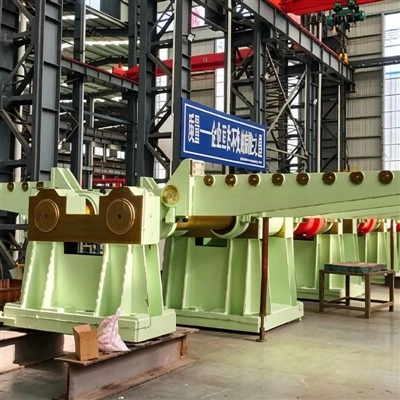
I get it, it’s a lot to wrap your head around. When you’re dealing with gear that’s the size of a house, power isn’t something you can guess. You need to talk to someone who’s actually worked on these setups, not just read about it in a manual. As a metallurgical equipment supplier, I don’t just sell you a machine—I help you figure out what power setup will keep it running 24/7, no surprises. If you’re planning a new build or retrofitting your site, hit us up to walk through your needs, no sales pitch, just real talk about what works.
Furnace Tube REFERENCES
- International Association for Metallurgical Contractors (IAMC). "Power Requirements for Large Industrial Furnaces and Rolling Equipment", 2022.
- U.S. Department of Energy. "Energy Efficiency Improvements for Metallurgical Processing Equipment", 2021.
- Industrial Power Society. "Harmonic Mitigation and Power Quality for Heavy Industrial Loads", 2020.
- Mining and Metallurgical Society of America (MMSA). "Remote Site Power Solutions for Mineral Processing Operations", 2023.
Jiangsu Dongfang Whole-Set Equipment Manufacturing Group Co., Ltd.
We are one of the most professional metallurgical equipment manufacturers and suppliers in China, also support customized service. With abundant experience, we warmly welcome you to buy durable metallurgical equipment from our factory. If you have any enquiry about pricelist, please feel free to email us.
Address: No. 9, Industrial Park, Xinqiao Town, Jingjiang City, Jiangsu Province
E-mail: dfctwm@163.com
WebSite: https://www.dongfangequip.com/
