Hey there, if you’re deep in the manufacturing game—whether you’re building modular construction rigs, EV battery enclosures, or heavy-duty HVAC systems—you’ve probably asked yourself a million times: are complex aluminum extrusions actually fire resistant? Spoiler: it’s not a straight yes or no, and as a supplier who’s stood side-by-side with clients through fire code audits, material testing headaches, and last-minute design tweaks, I can tell you it’s way more nuanced than that. Let’s break this down like we’re chatting over a coffee (the good stuff, not the office swill) and cut through all the jargon you’ve probably seen on random supplier websites. Complex Aluminum Extrusions
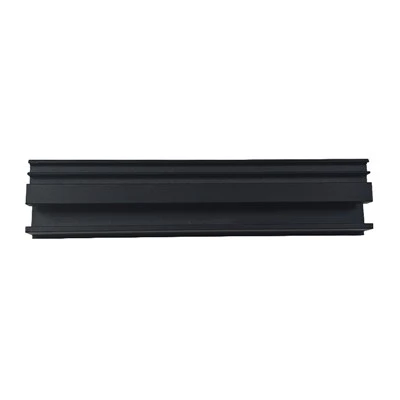
First off, let’s get one basic fact straight that most people skip: aluminum is not a “fireproof” material. Nothing is, right? Even steel warps and melts when the heat’s high enough. But “fire resistant”? That’s a different beast entirely—and where complex extrusions shine (or sometimes miss the mark). Let’s start with the core properties of aluminum that make it a solid pick for fire-focused applications. Aluminum’s melting point is around 660°C (1220°F), which is way higher than, say, plastic (which starts decomposing at like 200°C) or even most common woods (ignites around 300°C). It also doesn’t release toxic fumes when it heats up—huge for buildings, ships, or EVs where air quality during a fire could mean the difference between a small incident and a tragedy. Wait, but hold on—those are solid numbers for plain aluminum, but what happens when you twist, bend, drill, or weld it into a complex shape? That’s where things get tricky, and where my team earns our keep, not just shipping off generic extrusions.
Let’s talk about a common myth: if you use the same 6061 aluminum (the workhorse extrusion alloy) for a simple angle iron and a fancy, multi-cavity extrusion for a battery tray, their fire resistance is identical. No way. Complex extrusions—think those with hollow chambers, thin walls for weight savings, or custom profiles that hold wiring or insulation—have quirks that affect how they perform under heat. For example, a thin-walled section in a complex extrusion will soften faster than a thick slab of aluminum. We had a client last year making modular office partitions that used a 1.2mm wall extrusion to cut cost, and when they sent it to a third-party fire lab, it passed the 30-minute burn test (required for commercial partitions) but started deforming at the 28-minute mark. That’s a fail, even if it technically lasted the required window. So we switched them to a slightly modified profile—thickened the load-bearing edges, added a small solid rib in the hollow core to distribute heat—and bang, it passed with 12 minutes to spare, no extra weight added. That’s the kind of fine-tuning you only get if you’re not just sending a catalog part, but working through your specific fire requirements step by step.
Another big factor: surface treatments. A lot of clients slap on anodizing or powder coating to make their extrusions look good, but most of those finishes burn or flake off when exposed to extreme heat. Wait, but some powder coatings are rated for fire resistance? Yeah, but only the specific ones—we work with a couple specialty finishers that do intumescent coatings for extrusions, which swell up when heated to form a protective char layer. But here’s the catch: intumescent coatings work best on thicker aluminum sections, so a complex extrusion with tiny, detailed grooves might not get a uniform coating. We had an aerospace client making satellite components (yes, those have fire requirements too) that tried intumescent coating on a multi-port extrusion, and the coating pooled in the ports, leaving bare aluminum in high-heat zones. We adjusted the extrusion’s profile to add small, easy-to-clean ports, and the coating now applies evenly, passing NASA’s fire safety tests. That’s not a one-size-fits-all fix—that’s understanding how your complex shape interacts with every step of the manufacturing chain.
Now, let’s get real about when complex aluminum extrusions won’t cut it for fire resistance. If you’re building something that needs to withstand extreme, prolonged heat (like a furnace housing or a jet engine component), aluminum might not be your top pick—even complex extrusions. The melting point might seem high, but if you have a sustained heat source at 800°C, aluminum will liquefy before an hour is up. For those, you’re looking at steel or titanium, not aluminum. But for 90% of the applications our clients deal with—commercial building interiors, EV battery packs (wait, yes, EV batteries! That’s a huge use case for complex extrusions), food processing equipment where grease fires are a risk—complex aluminum extrusions are more than enough.
Wait, let’s dive into the EV battery thing, because that’s where I see a lot of misinformation lately. Battery packs generate heat—sometimes catastrophic, like a thermal runaway. What’s the goal for the enclosure? To slow that heat transfer from one battery cell to the next, and give firefighters time to evacuate. Complex aluminum extrusions are perfect here because you can design them with integrated cooling channels (hollow sections that carry coolant), flame-retardant insulation pockets, and mounting points for battery modules all in one single extrusion. No welding, no extra parts to fail, just a seamless profile that’s strong, lightweight, and fire-resistant. We’ve had a few startup EV makers come to us with a problem: their initial battery enclosure used steel, which was too heavy, so the range was garbage. They switched to a complex aluminum extrusion that had a 2mm wall around the battery, with a hollow center that ran a coolant line. We worked with them to test the extrusion in a thermal runaway simulation—they set one battery on fire inside the enclosure, and the heat only spread to adjacent cells by 10%, not 100%, because the aluminum’s high thermal conductivity (wait, yes, that’s a plus, not a con—we use that to pull heat away from the cells) and the integrated insulation. That’s the power of a custom complex extrusion: it does multiple jobs at once, including fire resistance, without adding bulk.
Now, let’s talk about testing, because that’s where a lot of suppliers cut corners. A lot of “fire resistant” extrusions on the market only pass the minimum standard, like 1 CFR 175 for food equipment or ASTM E119 for building materials. But if you’re making something that has a unique risk—like a modular home that’s in a wildfire zone, or a ship that’s out at sea where fires spread fast—you need to test your specific complex extrusion under your exact conditions. We don’t just sell you an extrusion and walk away. We’ll send samples to a lab with your fire specs: how hot? How long? What kind of fire (wood, electric, grease)? We’ve had clients who needed a 60-minute burn test for a wildfire zone, and another that needed to pass a 15-minute electrical fire test for a lab. For both, we modified the extrusion’s wall thickness, added small solid sections in areas that get direct flame, and adjusted the surface treatment. The wildfire one passed even when exposed to radiant heat from 12 feet away, and the electrical one didn’t melt or release fumes when a spark hit it directly. That’s not something you get with a stock extrusion—customization is key for complex shapes.
Wait, I should address a common worry: corrosion. Corroded aluminum is weaker, right? So if your extrusion is corroded, will it be less fire resistant? Yeah, that’s true. But we use marine-grade aluminum alloys (like 5052 or 5083) for outdoor applications, which are more resistant to corrosion, and we add a protective coating that’s rated for both corrosion and heat. We had a client making bus stop shelters in Florida (salt air, high humidity) that used a basic 6061 extrusion, and after a year, the walls corroded enough that they bent in a small fire test. We switched them to 5083 with a polyester powder coating, and two years later, their regular fire safety checks (required by Florida’s building code) show no corrosion, no deformation. That’s a small change that makes a big difference for fire resistance, especially in harsh environments.
Now, let’s wrap this up with the honest stuff: are complex aluminum extrusions fire resistant? The answer is: they can be, if you design them right, pick the right alloy, add the right surface treatment, and test them for your specific use case. It’s not a generic yes, it’s a tailored yes. Too many suppliers will tell you “all aluminum is fire resistant” or “this stock extrusion passes any test,” but that’s not how complex shapes work. Each hollow cavity, each thin wall, each cutout affects how heat spreads, how the metal softens, and how well it holds up when things go wrong.
If you’re working on a project where fire safety is non-negotiable—whether it’s a new building, an EV, or industrial equipment—don’t waste time on one-size-fits-all parts. Our team’s been fine-tuning complex aluminum extrusions for fire applications for years, and we can walk through your design, adjust it for heat performance, and get you test-ready samples fast. No runaround, no jargon, just straight talk about what your specific extrusion needs to pass and perform when it matters most.
If you’ve got a project where fire resistance is a priority, hit us up to chat through your requirements. We’ll share real test data for similar extrusions we’ve done, walk you through how we can adjust your profile to meet your fire specs, and answer any questions you have about alloys, coatings, or testing. No pressure, just real advice from people who deal with this every single day.
Heat Sinks References
ASTM E119, Standard Test Methods for Fire Tests of Building Construction and Materials
International Code Council (ICC), Fire Resistance Requirements for Building Extrusions
Aluminum Association, “Fire Performance of Complex Aluminum Extrusions” (2022)
National Fire Protection Association (NFPA), Standard for Electric Vehicle Battery Fire Safety (2023)
Xiamen Xihong Aluminum Industry Co., Ltd.
As one of the most professional complex aluminum extrusions manufacturers and suppliers in China, we’re featured by quality products and good service. Please rest assured to wholesale bulk durable complex aluminum extrusions made in China here from our factory. Customized orders are welcome.
Address: Unit East-1, 1st Floor, Phase II Factory Building, No.43 Xingbei Road, Jimei District, Xiamen City, China
E-mail: zhenghaiying@xmxhly.com.cn
WebSite: https://www.xihongaluminum.com/
