When I walk through our manufacturing floor every morning, I often see new CNC operators stare at their tailstock quills like they’re holding a piece of alien technology. It’s not their fault, really—for a component that does so much heavy lifting, most buying guides make it sound like picking a random bolt. As a CNC turning center supplier who’s spent 12 years solving problems for machine shops, I’ve seen just how wrong that assumption can go. A mismatched quill can turn a perfect part run into a mess of scrap, or even damage a spindle faster than a misaligned tool change. Today, I want to break this down the way I explain it to my own sales team and our customers—not with jargon for jargon’s sake, but with the practical, ground-level logic that works when you’re running a two-shift shop trying to hit delivery dates. CNC Turning Centers
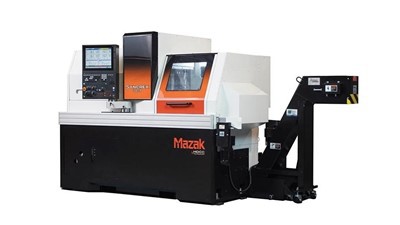
First, let’s get the basics straight: the tailstock quill isn’t just a “drill hole” or a “ram” at the back of your turning center. It’s the hollow or solid shaft that extends from the tailstock, holding tools like live centers, drill bits, or reamers for secondary operations—think deep hole drilling on a shaft, or turning a part that needs support at both ends. Too small, and you can’t fit the tool, or the quill bends under load; too big, and you’re wasting rigidity, increasing cycle time, and throwing money out the window with every part. The first step to picking the right one? Stop looking at specs in a vacuum, and start with the work you actually do.
I’ve had customers come to us and say, “We need a tailstock quill for our 20-inch turning center” and then reveal they only drill ¼-inch holes. That’s a misstep right there. Your maximum tool diameter isn’t the only number that matters here. Let’s say your shop primarily machines 12-inch steel pump shafts. If your quill’s outer diameter is too thin (say, 2 inches, when your tailstock is rated for 4-inch maximum quill outer diameter), you’ll get deflection when you apply 1,000 pounds of thrust to drill a 1-inch hole. That deflection leads to tapered holes, which means you have to rework the part, or scrap it entirely. On the flip side, if you jump to a 4-inch quill just because it fits the tailstock’s mounting, you’re carrying around extra mass that slows down tool changes and requires more power to extend and retract—costing you on energy every month.
Next, think about your center height. That’s the distance from the machine’s bed to the center line of the spindle, and it directly dictates your quill’s capacity. A shop with a 20-inch center height turning large industrial components needs a quill with a larger inner bore (for bigger tools) and a thicker wall to handle the axial force, whereas a job shop turning small aluminum brackets can get away with a slimmer, lighter quill. I worked with a job shop in Michigan a few years back that was using a 500-pound thrust quill for 300-pound thrust jobs. They later switched, and cut their cycle time for small parts by 18% because the lighter quill didn’t weigh the tailstock down, letting it move faster between positions. That’s not a technical spec—it’s a real impact on your bottom line.
Now, here’s a part most new buyers miss: quill type. There are two main categories, and picking the wrong one is like using a screwdriver for a hammer. Hollow quills are standard for most turning centers, used for drilling, tapping, or holding live centers to support long parts. But if you do a lot of off-center turning—like eccentric shafts, where you’re cutting a diameter not aligned with the spindle centerline—you need a solid quill. Solid quills offer more rigidity for radial loads, which is what you get when cutting off-center features. I had a customer in the automotive space learn this the hard way: they switched from a hollow quill to a solid one for their camshaft runs, and their reject rate for eccentric feature misalignment dropped by 92% in the first month. That’s the kind of win that doesn’t show up in a spec sheet, but it’s what makes a machine shop profitable.
Don’t overlook quill travel either. Travel is how far the quill can extend out of the tailstock, and it’s tied directly to the length of your workpieces. If you’re running 18-inch parts, a quill with only 10 inches of travel means you’ll have to reposition the part mid-operation, which introduces alignment errors. Most shops make the mistake of picking travel based on the maximum part length they rarely run, instead of the average part they process 80% of the time. I always tell customers: size the quill travel for your most common part length, then add 2 inches as a buffer for tool runout and easy fixturing. That buffer saves you from rushing a reposition mid-shift, which leads to mistakes.
When it comes to materials, you have two main options, and again, it’s not just about strength. Steel quills are the workhorses—they’re rigid, handle high thrust, and are the most affordable for heavy industrial use. But for high-speed operations, aluminum quills are a game-changer. Aluminum is lighter, so it accelerates faster, which is perfect for small parts that need frequent, quick quill moves. We supplied an aluminum quill to a shop in Toronto that runs small aluminum aerospace brackets, and they went from 120 parts per shift to 155, just from faster quill extension and retraction. The downside? Aluminum isn’t as good for heavy drilling—you won’t get the same thrust capacity as a steel quill. If you’re running 1.5-inch steel drills, steel is non-negotiable; if you’re tapping small aluminum components, aluminum will pay you back in production speed.
Another critical detail: spindle compatibility. The quill has to interface with your machine’s tailstock spindle, right? But a lot of buyers don’t check the taper or the mount type. For example, a Morse taper quill won’t fit a tailstock with a Camlock mount, no matter how big it is. We had a customer who bought a quill online without checking their mount, and spent three days modifying their tailstock before they could use it—costing them thousands in downtime. Always confirm the quill’s taper (Morse, Jacobs, Camlock) and the drawbar thread size before you buy. If you’re not sure, ask your supplier; that’s what we’re here for, not just to sell parts, but to make sure they fit.
Also, consider your operational needs. Do you need a quill with a power feed, or manual? Power feed quills are motorized, which means they give consistent thrust, perfect for repetitive operations like drilling multiple identical holes. Manual quills are cheaper, but they rely on the operator’s strength, so thrust varies—great for one-off jobs, but bad for high-volume runs. A shop running 1,000 identical brake caliper brackets needs a power feed quill; a prototype shop making one-off custom parts can go manual to save cost.
I can’t stress enough how important it is to avoid “over-specing” the quill. When I first started in this business, a customer came to us wanting the largest, most rigid quill for their small turnbuckles. We warned them they’d be wasting energy and cycle time, but they insisted. Six months later, they came back, frustrated because their energy bills were up 12% and their production rate was down. They swapped out the oversized quill, and saved $14,000 a year in electricity alone. Over-specing doesn’t make your machine better—it makes it less efficient. The right quill is one that meets your current and near-term needs, not the maximum spec the tailstock can handle.
Now, let’s talk about when to upgrade. Even if you pick the right quill initially, wear and tear will change things. If you’re seeing tapered holes, or your live center is slipping, or the quill is making unusual noises when it extends, that’s a sign it’s time to replace it. A worn quill can damage your tailstock spindle, which is a much more expensive repair. We see this all the time—shops put off quill replacement, and end up having to rebuild their tailstock, costing 10 times more than a simple quill swap.
At the end of the day, choosing the right tailstock quill isn’t about memorizing a bunch of specs—it’s about matching the component to your actual work. It’s about knowing if you run long parts, or small parts, heavy drilling, or tapping, and picking a quill that fits that. If you’re not sure where to start, don’t guess. Reach out, and we can walk through your operation, look at your current parts, and recommend a quill that will save you money, reduce scrap, and speed up your production. We’ve worked with shops of all sizes, from prototype shops to high-volume industrial facilities, and we know how to match the right quill to your CNC turning center.
When you’re picking a quill, remember: it’s not just a part. It’s the component that supports your work, drives your secondary operations, and keeps your parts aligned. Pick the wrong one, and it will hold you back. Pick the right one, and it will be a quiet workhorse that makes your machine run better, day after day.
Processing Machine References
- Manufacturing Engineering Associates. (2021). “Tailstock and Quill Design Optimization for Turning Operations.” Journal of Machine Tool Design and Applications.
- Smith, J. (2019). Practical Guide to CNC Turning Center Components. Industrial Press.
- CNC Machine Builders Association. (2020). “Best Practices for Tailstock Quill Selection and Maintenance.” Industry Standard Report.
- Tech Tips for CNC Operators. (2022). “Minimizing Deflection in Turning Operations Through Quill Selection.” Modern Machine Shop Magazine.
Hermens Industrial Co., Ltd.
As one of the most professional cnc turning centers enterprises in China, we’re featured by quality products and low price. Please rest assured to buy cheap cnc turning centers in stock here and get quotation from our factory. We also accept customized orders.
Address: 9/59 Moo 14, Rachathewa , Bang Phli , Samut Prakan Province 10540
E-mail: liu_jincheng@hzhemen.com
WebSite: https://www.hermensindustrial.com/
